Theme parks have mastered something every community strives to create: places people visit to again, and again. While public parks operate with different goals and budgets, the mindset that guides theme park design offers a surprisingly practical roadmap for keeping civic spaces fresh and relevant.
Public parks are facing aging infrastructure, shifting community expectations, and the responsibility to provide spaces that support daily life. By borrowing design principles from destinations like Walt Disney World and Universal Studios, park systems can create environments that are immersive, welcoming, and engaging without requiring a costly attraction.
As LandDesign Principal Beth Poovey explains, “This approach is rooted in feasibility, not fantasy.” Our combined experience in public park design and themed entertainment has shown that storytelling, people-first experiences, diverse amenities, and memorable moments shape parks people return to.
The Feeling isn’t an Accident. It’s Storytelling.
In places like Magic Kingdom, the story is established through deliberate environmental cues. A grand gateway, a change in scale, and a clear focal point signal that you’re leaving the ordinary and stepping into the extraordinary. Disney Imagineers call that focal point, like Cinderella’s Castle, the “weenie effect,” a visual anchor that sets context and guides movement. These coordinated elements create an immediate sense of immersion and story without a single sign explaining it.
American Legion Memorial Stadium

Creating a sense of story
Public parks can evoke that same sense of story in subtle, attainable ways. A recognizable gateway can become an anchor that orients visitors. At American Legion Memorial Stadium, the 3D steel sculpture at the entrance functions as that landmark, signaling the arrival, honoring the site’s historical contexts, and connecting visitors to the spirit of the venue.
As LandDesign Director Andrew Garrels explains, “You don’t need fantasy to create a sense of story. You just need design that helps people feel guided and welcomed.” Storytelling in parks isn’t about grandeur; it’s about clarity – creating environments that help people grasp a place instinctively and want to see what comes next.

Boxi Park at Lake Nona Town Center

Be Our Guest Moments.
One of the quiet strengths of theme parks is how they make every visitor feel seen. Hospitality is woven into the theme park experience through the presence of people who greet and guide. It’s the performers in Diagon Alley, the custodial artists who “paint” characters on the pavement, the small interactions that make guests feel like they belong. In the public realm, hospitality isn’t a performance, it’s stewardship. It’s the presence of staff who engage with residents, the consistency of local partners who host events, and the energy created by programming that reflects the community.
Hospitality and public spaces
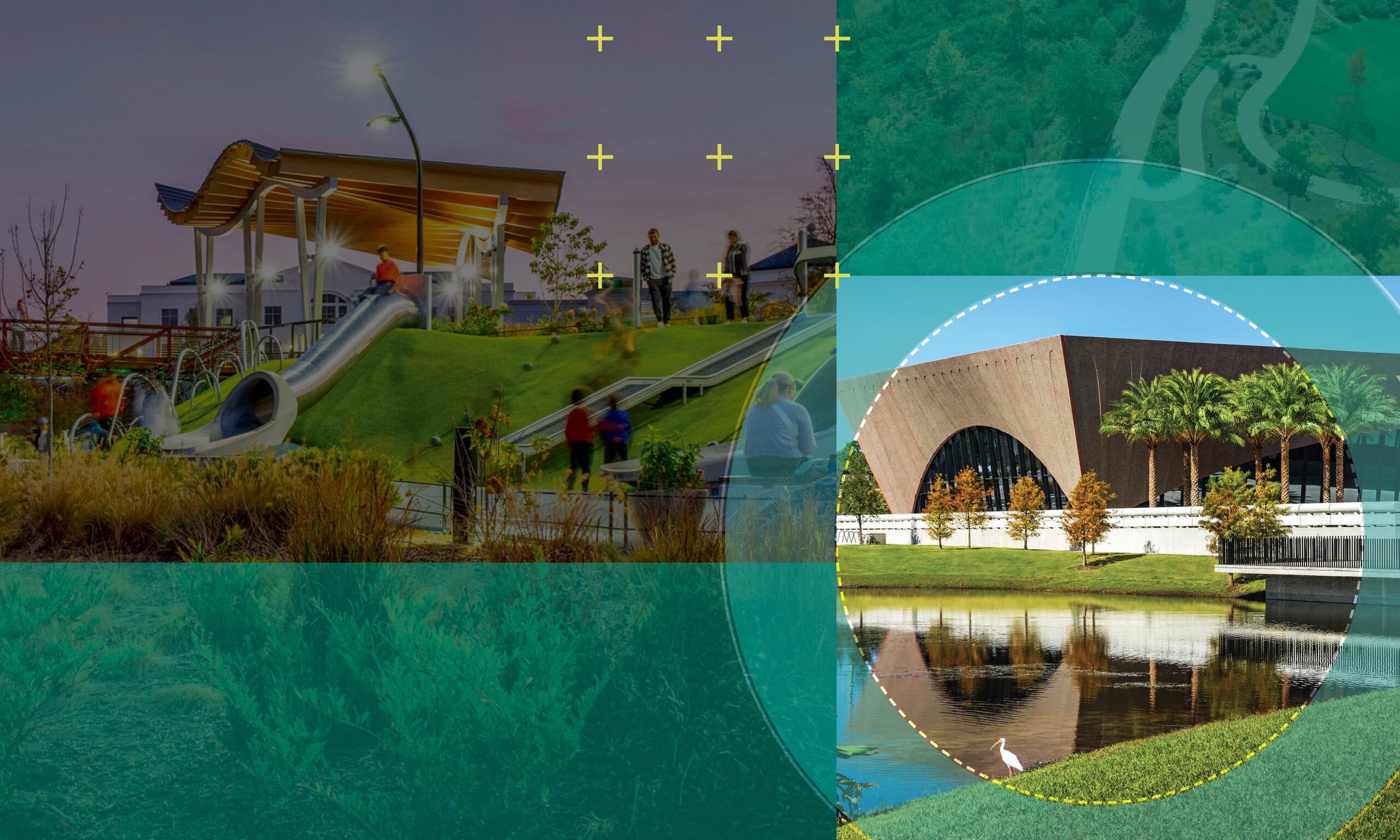
As Director Carrie Read puts it, “Hospitality isn’t extra. It’s how parks show people they matter.” At Boxi Park, hospitality is treated as a core design principle. The park’s developer, Tavistock, keeps the experience fresh with test kitchens, performances, markets, and community events, a people-first approach that has turned a privately funded pop-up into a true community amenity. Visitors know something is always happening, and that sense of care and energy becomes the invitation to return.

Something For Everyone.
Theme parks understand the importance of balancing what’s beloved with what’s new. At Disney, guests flock to classic attractions like Haunted Mansion with the same enthusiasm as with newer experiences like TRON Lightcycle Run. That balance–nostalgia paired with novelty–is part of what keeps people coming back.
Public parks operate in the same way. Recreation fields, open lawns, and playgrounds remain the backbone of community life because they are dependable, familiar, and multigenerational. But weaving in new experiences, like public art, water features, and performance stages, creates new reasons to visit.
Surprise and delight
Senior Associate Jeff Mis shares that, “Parks succeed when they balance comfort with discovery. People want what they know, and they want to be surprised.” This very idea shaped Bell Tower Green. The expansive lawn and shade canopy provide the classic comforts of a community park, while the playful waterwall and interactive playscape introduce elements of delight. It’s a place where a family can return week after week and still find something new to explore.

The Finale is What Brings Them Back.
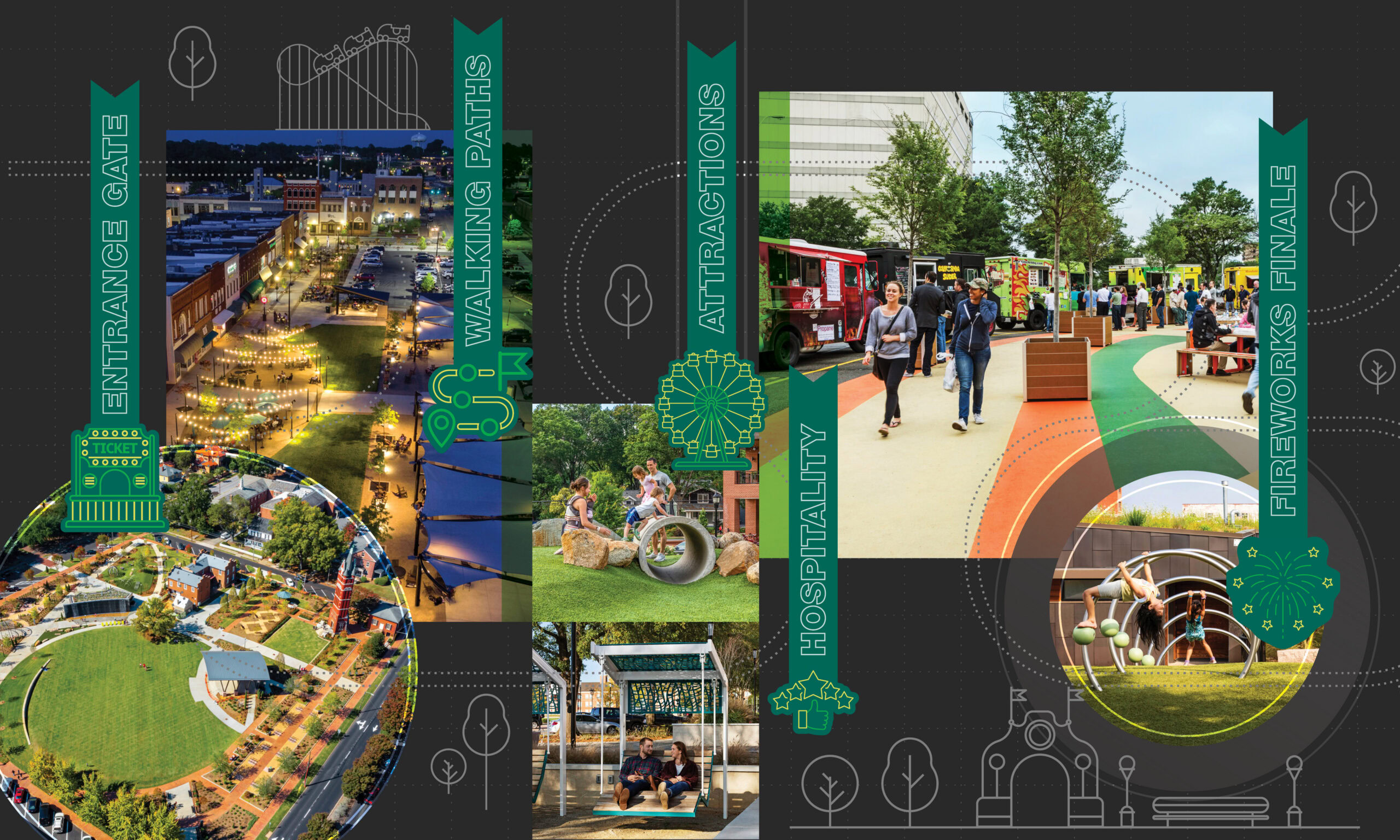
Every theme park has a grand finale. From nighttime fireworks to the final turn around the lagoon at dusk, these moments don’t just end the experience, they become the memory people carry with them. Public parks can create their own finale in ways that feel authentic and rooted in community. It may be a shaded overlook that frames the sunset, a piece of public art that becomes a neighborhood landmark, or a weekly event that turns into tradition. When a park offers a meaningful takeaway, a moment that lingers, it becomes part of people’s routines, stories, and rhythms of daily life.
Union Square Renovation + Streetscape Enhancements

Beth Poovey says, “When you design parks as systems of experience rather than collections of amenities, you naturally build moments people want to return to.” That idea shaped the evolution of projects like Union Square, where flexible infrastructure supports everything from lively weekend markets to quiet weekday afternoons. No two visits feel the same, and that reliability-meets-possibility is what keeps people coming back.
In the end, the finale isn’t a show, it’s the feeling of belonging, discovery, and connection to place. That’s the delight people return to again, and again.