Orlando, FL
District West
Turning Constrained Land Into Opportunity
status
Completed 2024
client
Crosland Southeast
expertise
Residential
services
Civil Engineering Landscape Architecture


Engineering a Path to Housing
Transforming a borrow pit and floodplain into a development-ready site that expands housing options near Orlando’s Packing District.
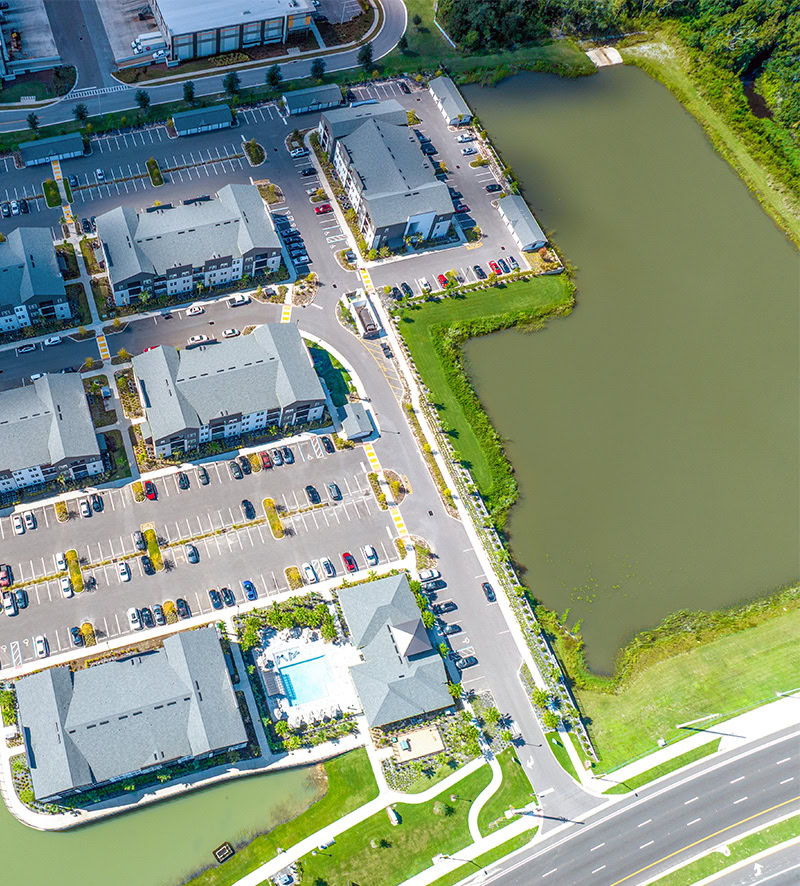
District West brings new residential development to a high-growth area where land availability is limited and housing demand remains strong. Once an Florida Department of Transportation (FDOT) borrow pit that evolved into wetland and FEMA-designated floodplain, the site posed complex physical and regulatory challenges despite its location within a designated Opportunity Zone. Seeing possibilities where others saw constraints, Crosland Southeast set out to transform the underutilized land into a viable housing development that contributes to the growth of the Packing District and greater Orlando region.
With experience navigating complex sites and coordinating with public agencies, LandDesign was engaged to re-envision how the constrained property could perform. The site’s floodplain designation, unsuitable soils, and high water table required a carefully engineered stormwater solution that preserved flood storage while supporting new development. LandDesign delivered infrastructure solutions that manage water quality, preserve flood storage, and ultimately created a development-ready site that supports new housing.
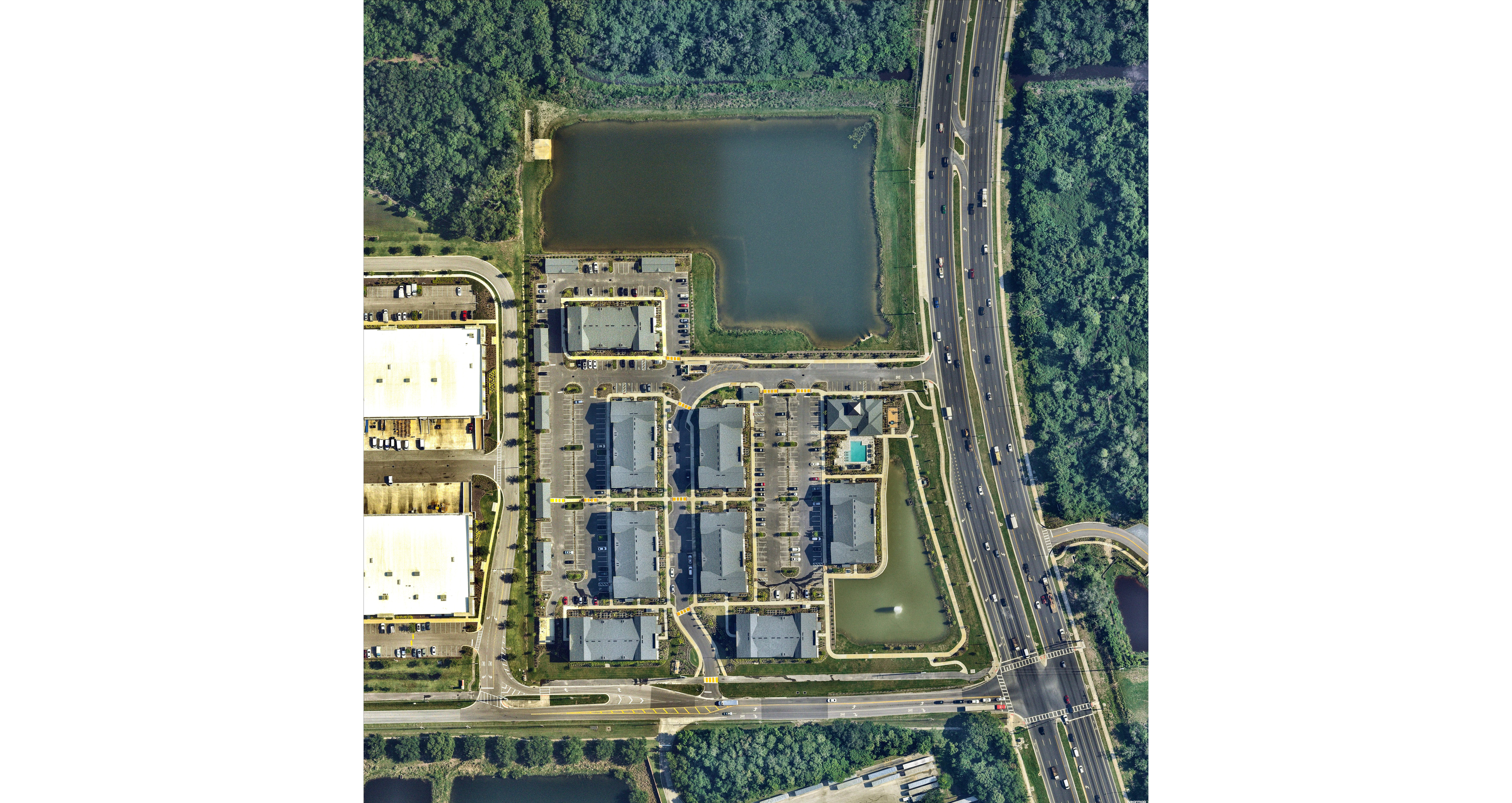
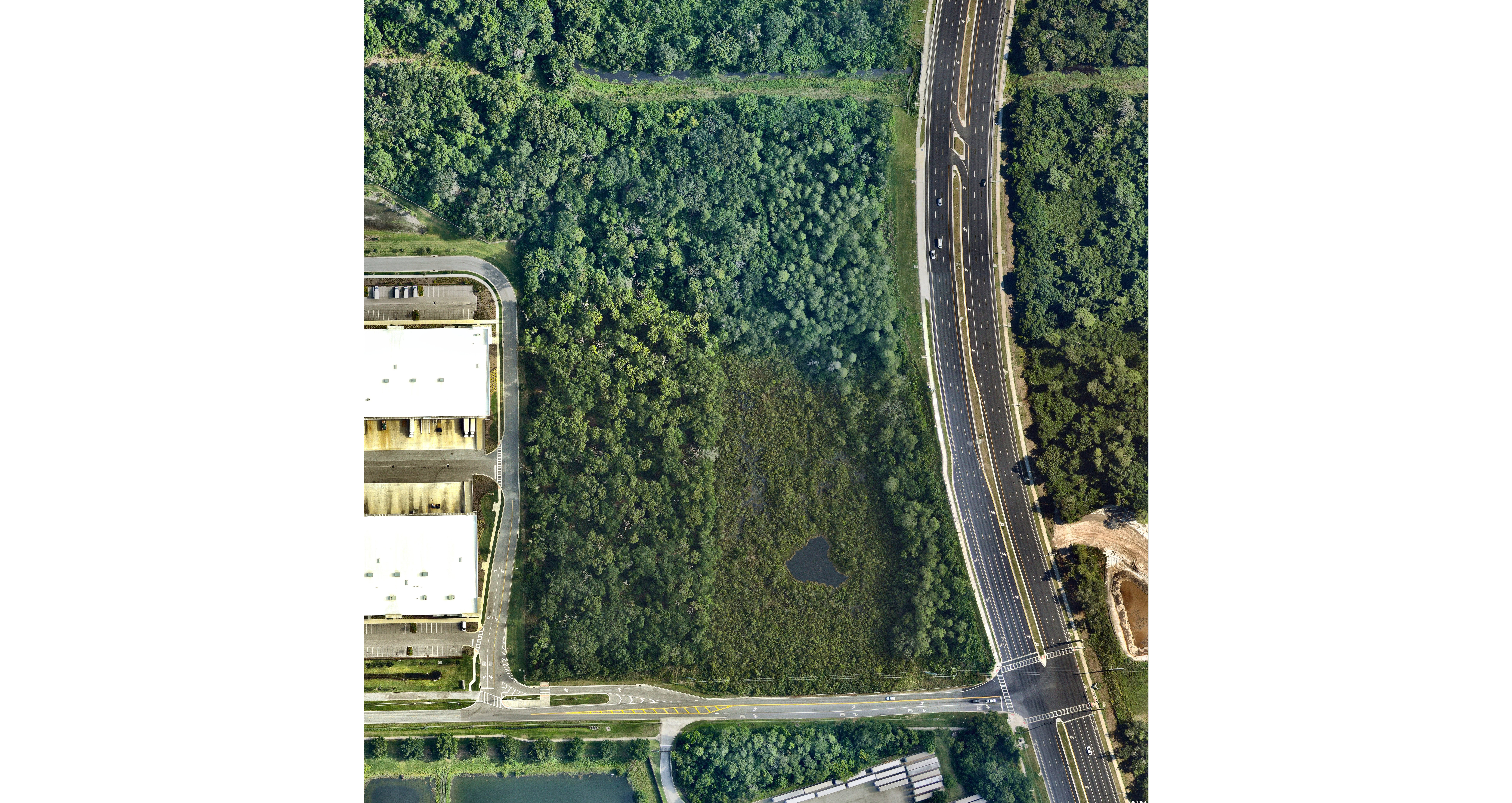
District West began not with a perfect site, but with the belief that the right strategy could unlock its potential. The project required coordination across multiple utility and regulatory agencies, including wastewater with the City of Orlando, potable water and power with the Orlando Utilities Commission, roadway access permitting through FDOT, and floodplain coordination with FEMA. LandDesign’s understanding of how these agencies work, each with their own requirements, priorities, and timelines, helped bridge the gap between public processes and private development goals. By guiding the permitting strategy and aligning stakeholders, LandDesign helped advance the project into design and construction, proving that technically complex, previously overlooked land can be reclaimed through thoughtful engineering.
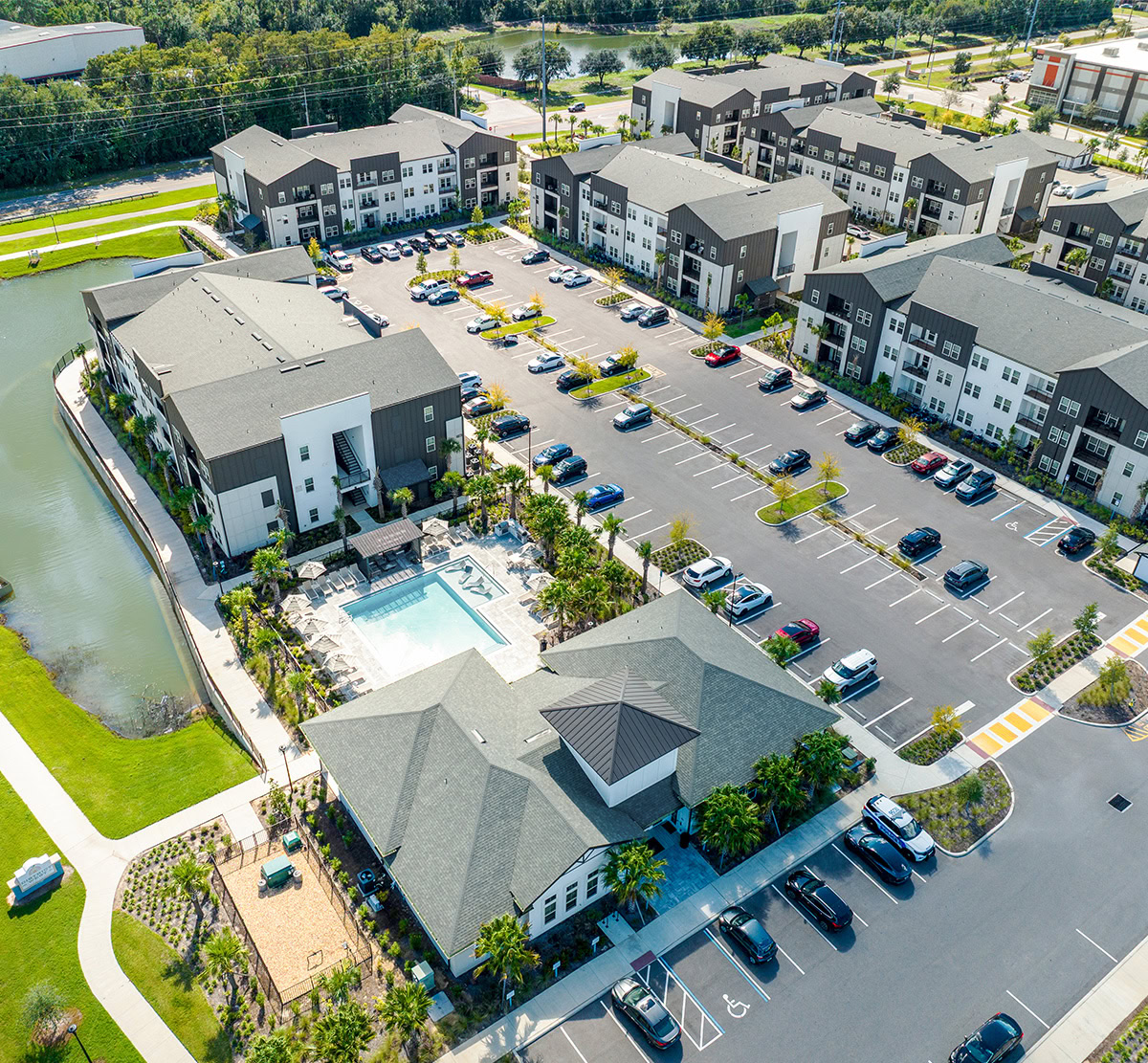


The biggest obstacle to developing the site wasn’t the program. It was the water. Before any design decisions could be made, the team had to solve how stormwater would remove nitrogen and phosphorus from runoff, manage treatment volume, and maintain floodplain storage. Any solution had to work within the wetland condition of the former borrow pit, preserve the hydrologic function of the site, and create a buildable footprint for roadway access.
Restoring Function Through Stormwater Design
Rain gardens were introduced as a pretreatment system. Each rain garden includes layers of sand, rock, and planting material, with a perforated pipe set in rock bedding to support infiltration into surrounding soil during storm events. During larger storms, excess flow is conveyed into the primary stormwater pond in the southeast corner of the site, which also provides a sustainable non-potable water source for landscape irrigation. Hydrologically, the site continues to function like the original borrow pit with stormwater strategically split and routed through bypass pipes to maintain continuity. Coordination with the City of Orlando was critical because adjacent development from the south discharged stormwater onto the site, and decisions about water relocation and routing needed to be made jointly.

Designing Beyond the Boundary
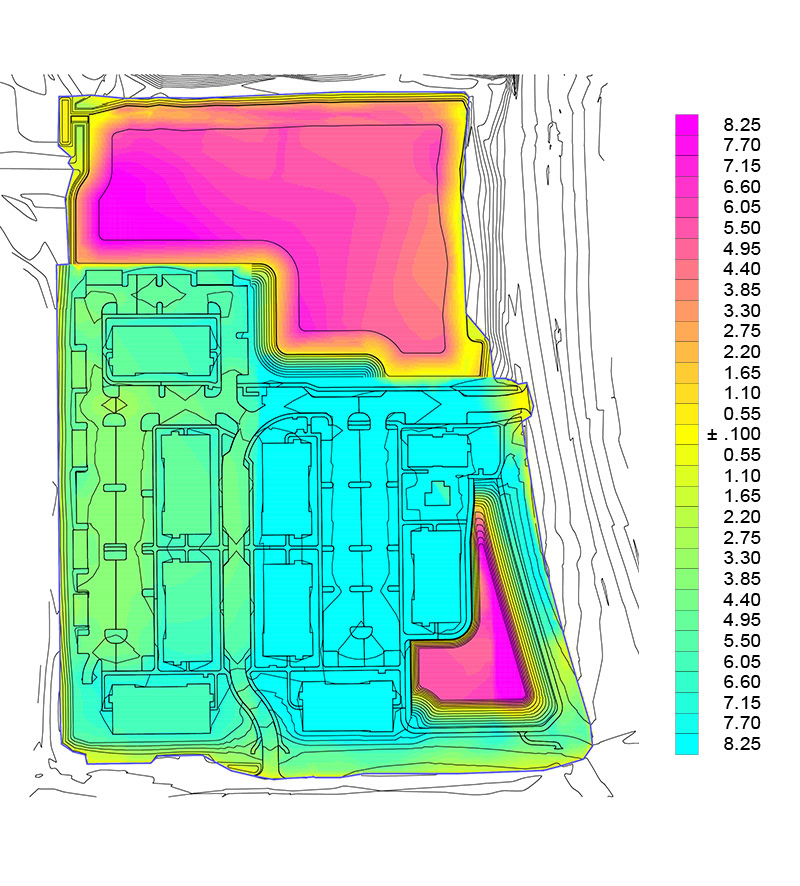
Unlike typical FEMA reviews, the floodplain study extended beyond the project boundary. We analyzed the entire surrounding basin to estimate the flood elevation to confirm storage capacity and determine where fill and stormwater infrastructure could be placed.

Physical
Leveraged FEMA floodplain modeling to define the flood elevation and storage capacity, allowing the stormwater system to work within the existing borrow pit hydrology
Functional
Removing 7,000 cubic yards of unsuitable material and strategically placing 200,000 cubic yards of engineered fill to create a development ready site
Social
Transforming an overlooked floodplain into a residential community, bringing housing to a high-demand neighborhood of Orlando without expanding the urban footprint
Physical
Leveraged FEMA floodplain modeling to define the flood elevation and storage capacity, allowing the stormwater system to work within the existing borrow pit hydrology
Functional
Removing 7,000 cubic yards of unsuitable material and strategically placing 200,000 cubic yards of engineered fill to create a development ready site
Social
Transforming an overlooked floodplain into a residential community, bringing housing to a high-demand neighborhood of Orlando without expanding the urban footprint