Loudoun County, VA
Rivana at Innovation Station
A District Anchored by Access and Driven by Opportunity
status
Ongoing
client
Timberline Real Estate Partners
expertise
Master Planned Communities, Mixed Use, Public Realm + Open Space
services
Master Planning Landscape Architecture


A Balancing Act of Nature within Urbanism
A next-generation mixed-use community shaped by policy alignment, environmental restoration, multimodal access, and a financing structure capable of delivering long-term value.
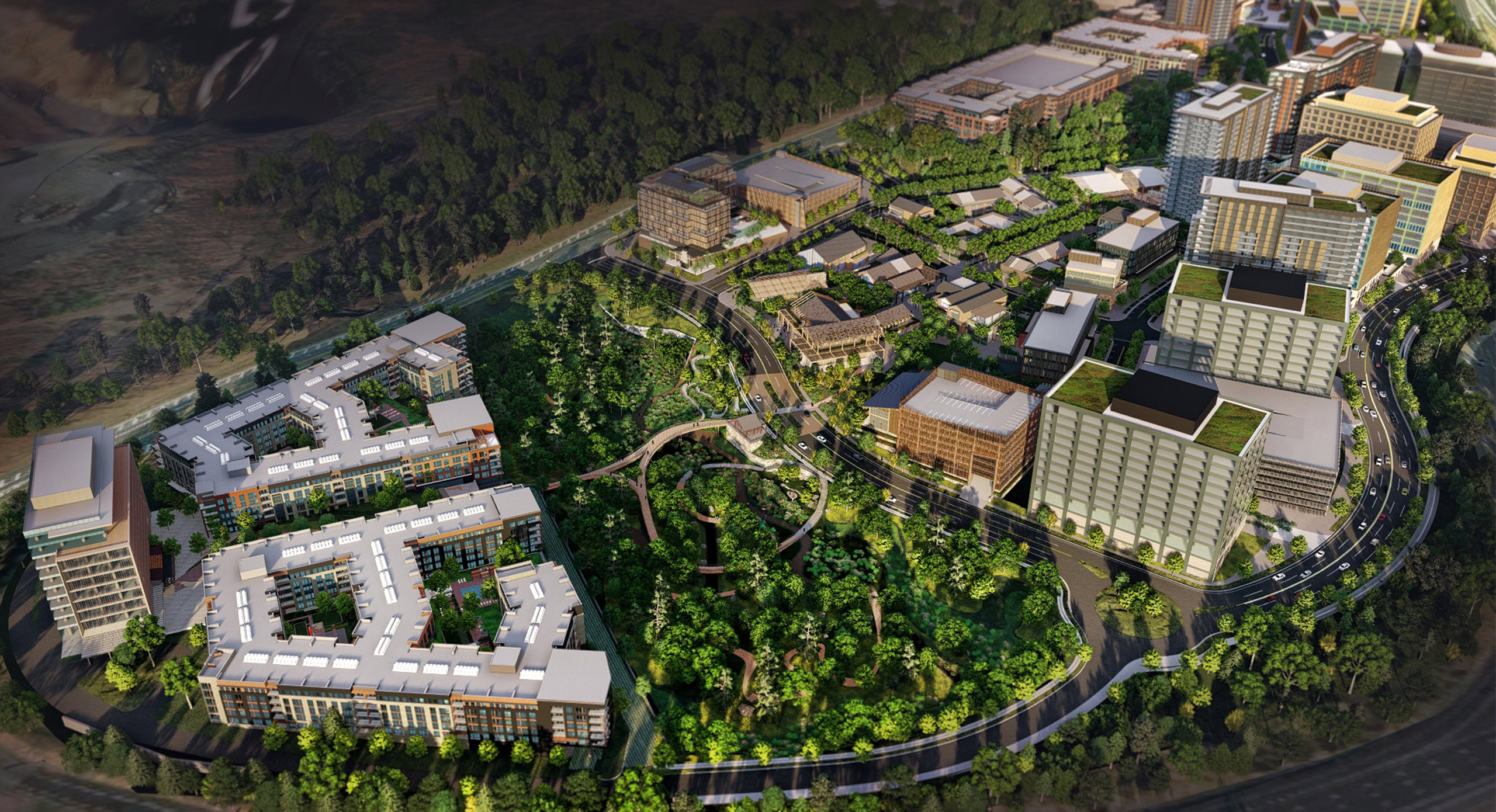
Rivana at Innovation Station is a 103-acre mixed-use development spanning Loudoun and Fairfax counties, two high-opportunity jurisdictions in the DC region. Positioned at the intersection of the Dulles Toll Road and Route 28 and served by the WMATA Silver Line at the Innovation Center Station, Rivana advances the 2019 Loudoun County Comprehensive Plan by transforming a long-undeveloped greenfield site into a transit-oriented district that integrates restored natural systems, a walkable public realm, and a diverse mix of commercial uses. With more than four decades of experience navigating the region’s complex land development and entitlement process, LandDesign played a critical role in delivering the master plan and led the development of the design guidelines, and open space framework for the project’s 80-acre Loudoun County portion. This work informed the County’s 2023 rezoning and Community Development Authority approvals, an uncommon achievement in Virginia, and helped unlock funding for infrastructure and public realm improvements.
Rivana’s proximity to the Dulles International Airport, the Silver Line, and regional technology and innovation hubs, paired with its commitment to high-quality open space, strengthens its appeal for public and private investment. At full build-out, the Loudoun County portion of Rivana includes more than five million square feet of residential, office, retail, entertainment, and hospitality development, along with a robust trail network and open space system. Together, these elements position Rivana to advance with a feasible path toward implementation that can evolve with the region and remain competitive over time.
A Public-Private Partnership That Delivers
Rivana’s major breakthrough was the establishment of a Community Development Authority (CDA) and authorization of a $340 million tax increment financing program, an uncommon public-private structure in Virginia. The CDA provides a solution to the site’s long-standing challenges by delivering upfront capital for public infrastructure, enabling a coordinated, phased delivery of critical improvements and ensures long-term stewardship through public ownership.
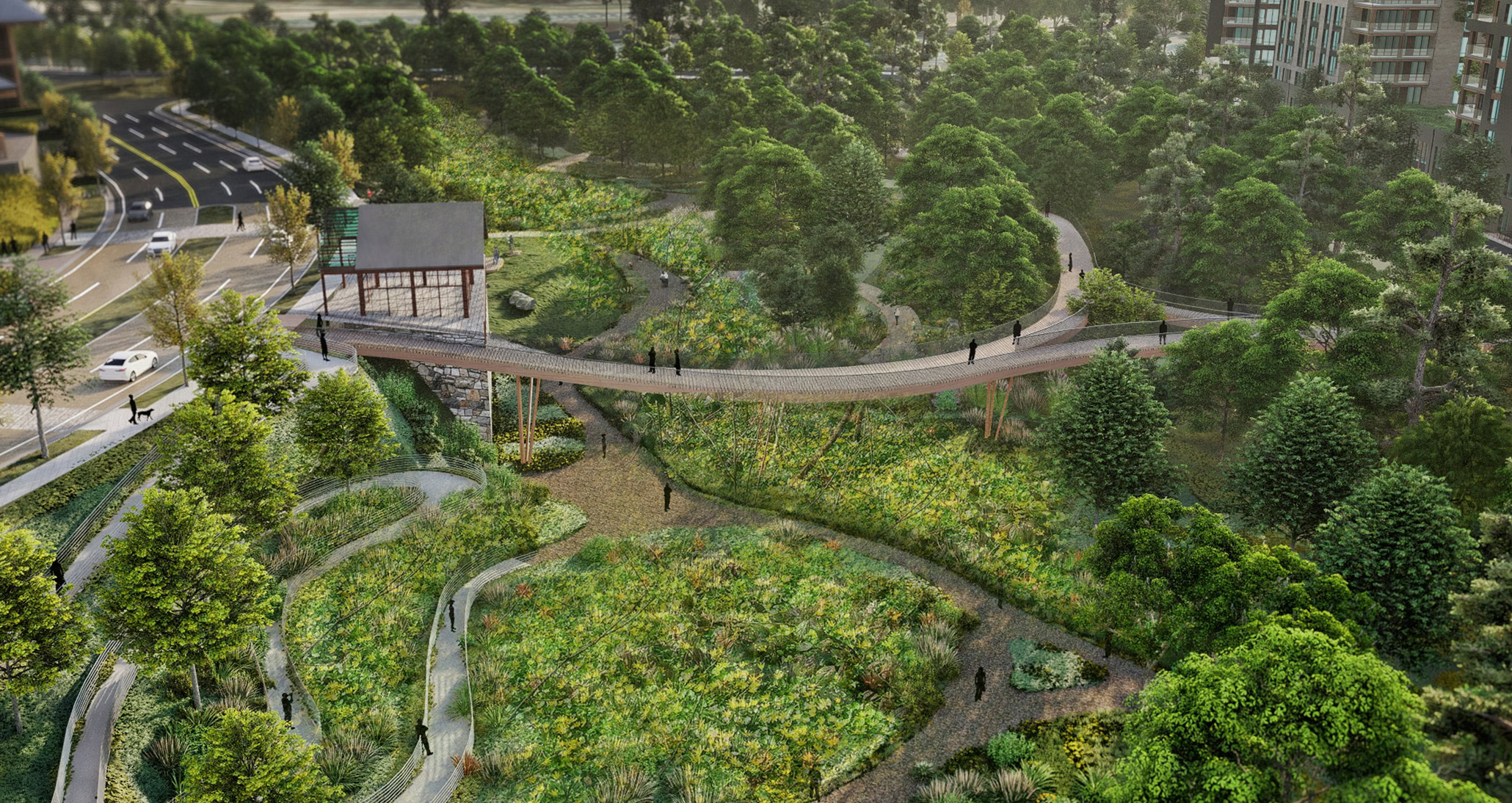
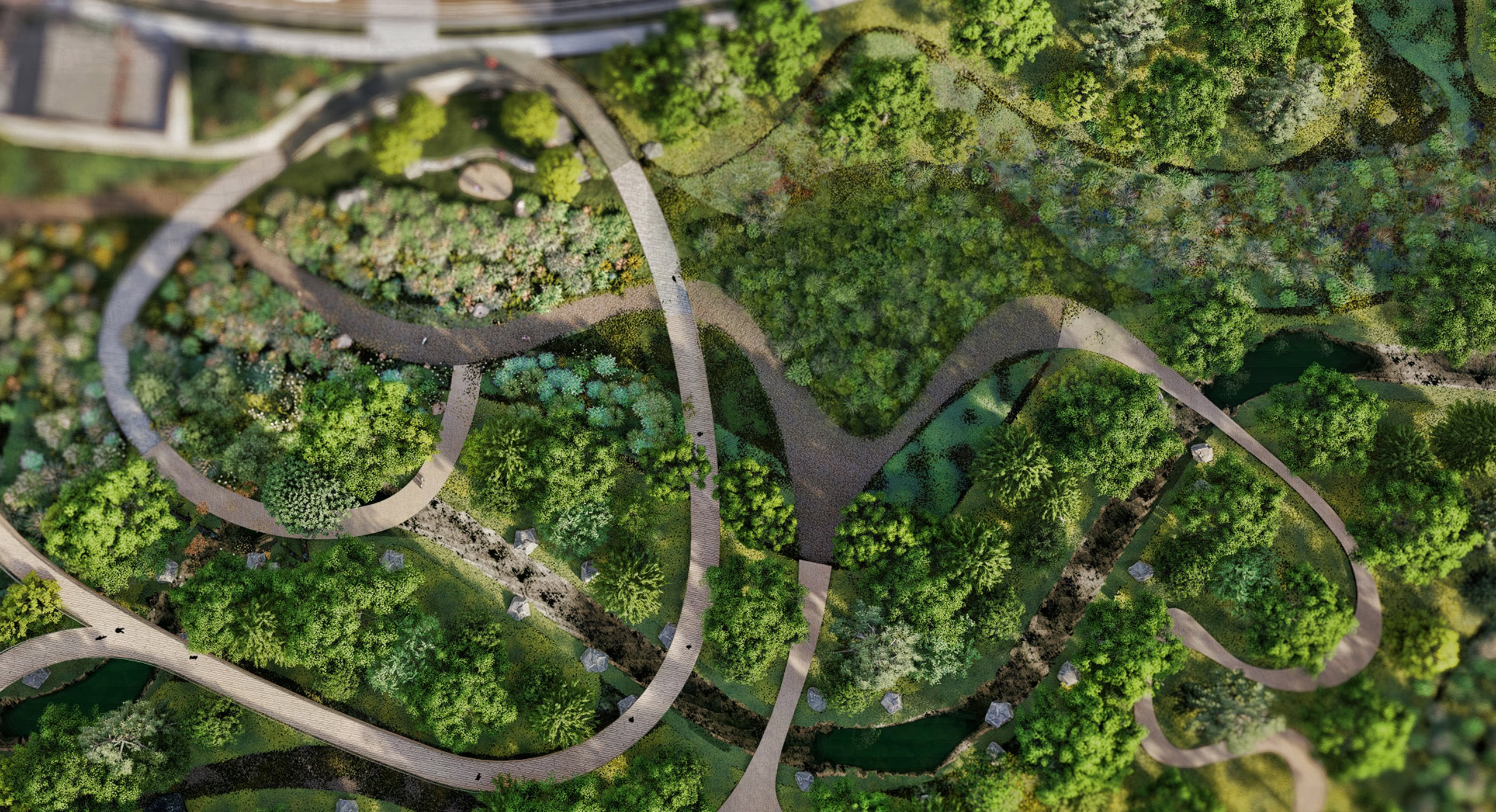
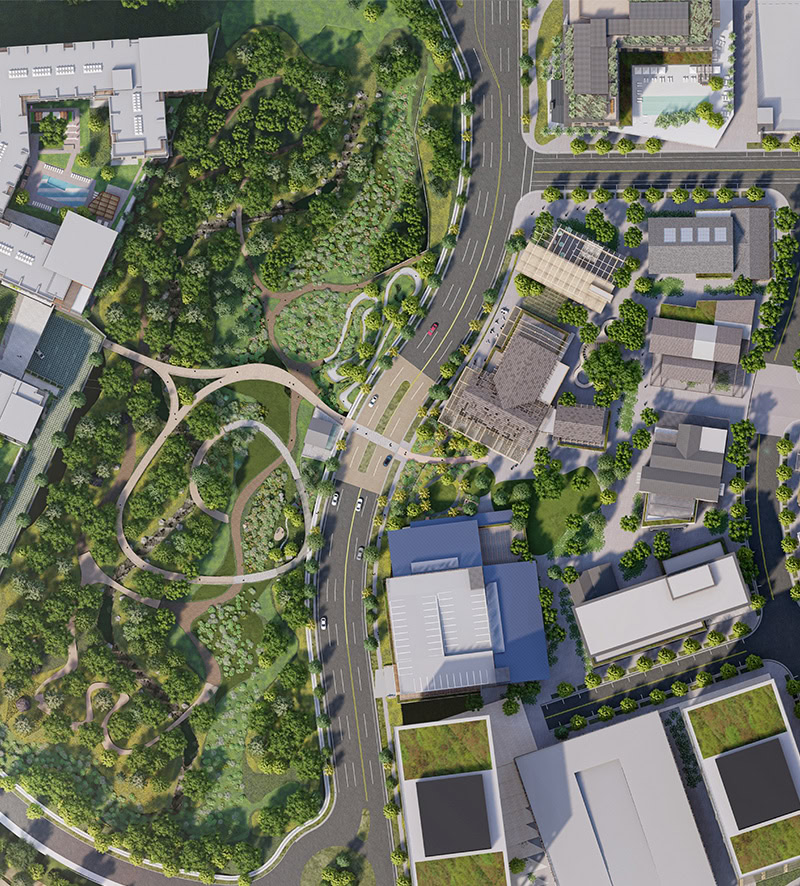
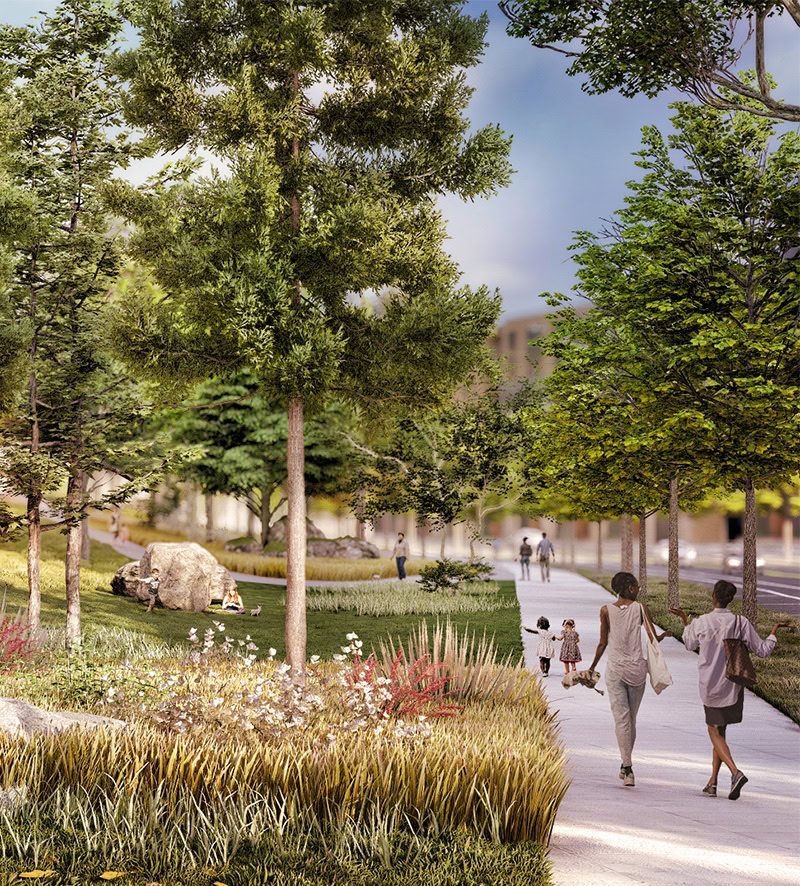
Rivana is defined by an open space network that integrates ecological systems into the urban fabric, shaping blocks, density, and mobility around the site’s natural landforms and hydrological features. The restoration of 1,300 linear feet of the Horsepen Run tributary and the transformation of an existing swale on the western portion of the site form Rivana Park, an 11-acre public open space featuring reforestation areas, pollinator meadows, stormwater improvements, and a connected trail system. To the east, dramatic natural outcrops are preserved as Boulder Ridge, creating a distinctive pedestrian link between the Innovation Center Station and Rivana Village and demonstrating how natural features guide circulation, identity, and user experience.
This network continues through trails, shared-use paths, and pedestrian-oriented streets that enhance connectivity across the district and support regional mobility goals by expanding access to transit, recreation, and employment. A planned greenway along the Dulles Toll Road extends this system, creating a continuous multimodal link across the site. Together, these open spaces and mobility corridors form a cohesive public realm that supports everyday use, reinforces walkability, and strengthens the connection between development and restored natural systems.

Much of the site has remained undeveloped for nearly 30 years despite successive rezonings, beginning with Dulles World Center and later The Hub. Although those entitlements envisioned a mixed-use, transit-oriented community, they were tied to outdated Comprehensive Plan policies, early infrastructure assumptions, and land-use sequencing triggers that no longer reflected market conditions. Earlier visions relied on assumptions that shifted significantly with growth in the Dulles corridor and the arrival of the Silver Line, preventing the entitlements from progressing into implementation and leaving a high-opportunity site at a new transit station idle for decades. Approved in 2023, the revised plan for Rivana updates and refines three decades of entitlement work, replacing outdated policy frameworks with a program fully aligned with the 2019 Comprehensive Plan’s goals for urban development, multimodal connectivity, and residential and employment density.

Physical
Realigning decades-old entitlements with today’s goals and establishing a CRA to deliver the financing structure needed to move a long-stalled, transit-adjacent site toward coordinated, district-scale implementation
Functional
Embracing the site’s complex conditions, including steep topography, extensive rock, and the Horsepen Run stream valley, as the foundation of the naturalized open space system
Social
Creating a human-scaled experience where streets, parks, and plazas work together to provide intuitive, accessible connections between homes, jobs, transit, and open space
Physical
Realigning decades-old entitlements with today’s goals and establishing a CRA to deliver the financing structure needed to move a long-stalled, transit-adjacent site toward coordinated, district-scale implementation
Functional
Embracing the site’s complex conditions, including steep topography, extensive rock, and the Horsepen Run stream valley, as the foundation of the naturalized open space system
Social
Creating a human-scaled experience where streets, parks, and plazas work together to provide intuitive, accessible connections between homes, jobs, transit, and open space