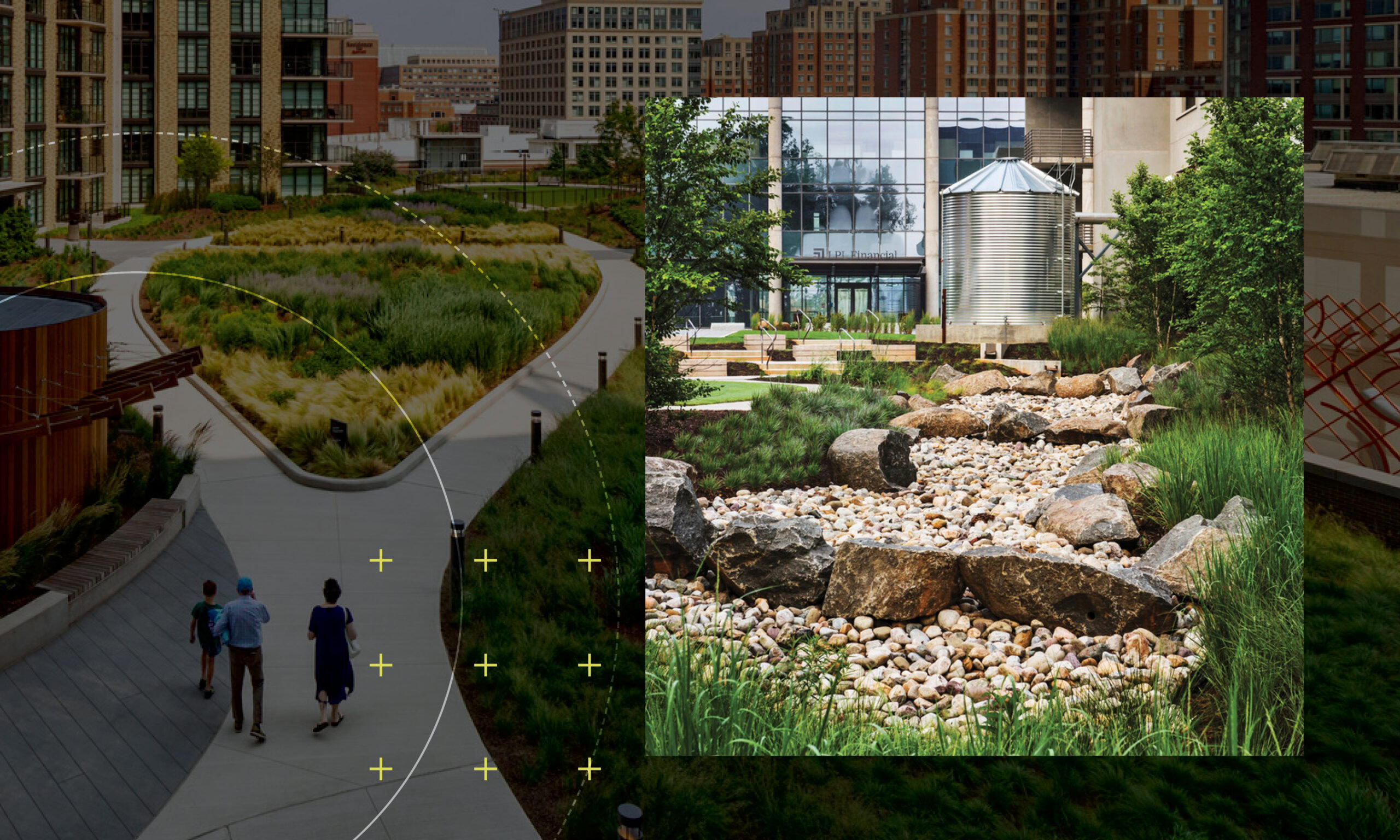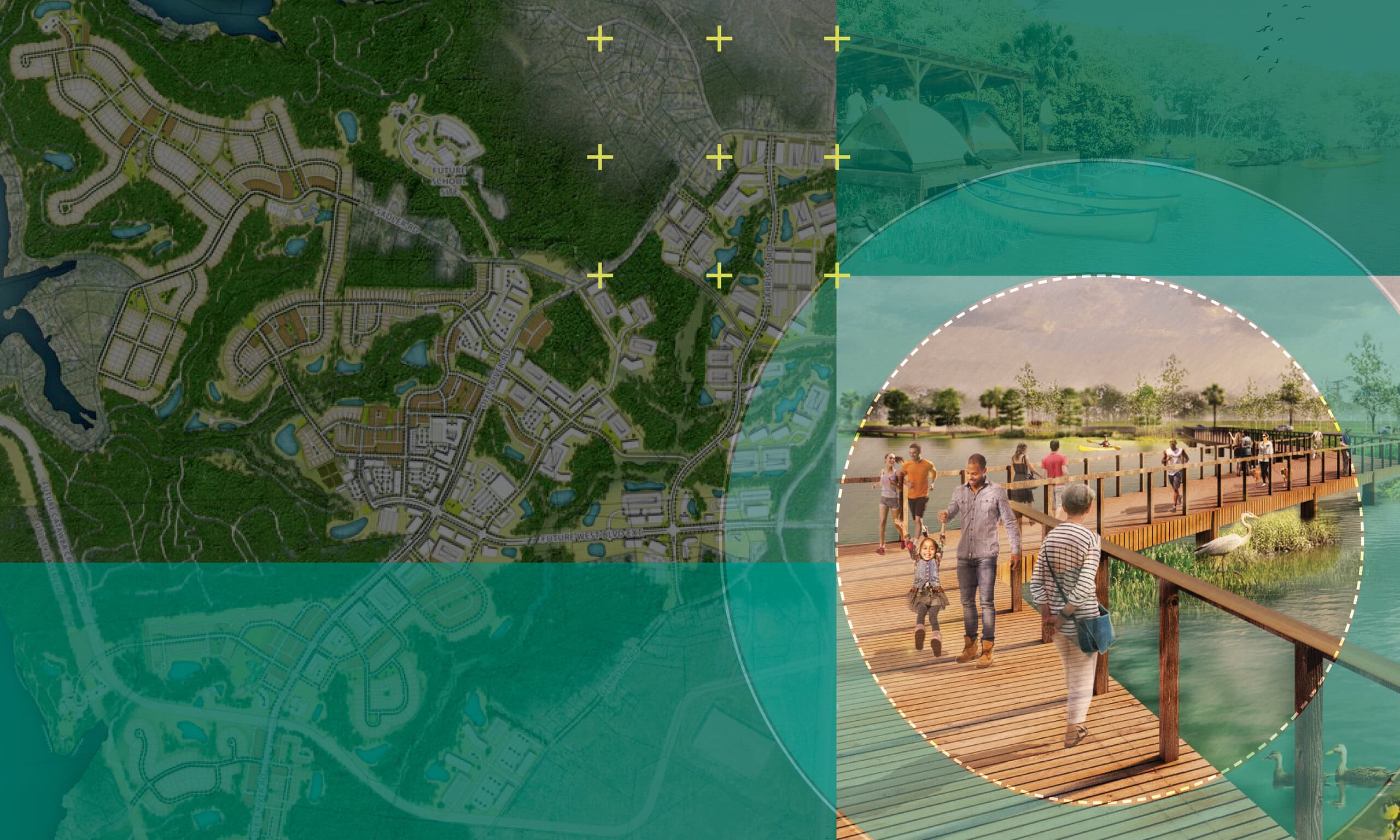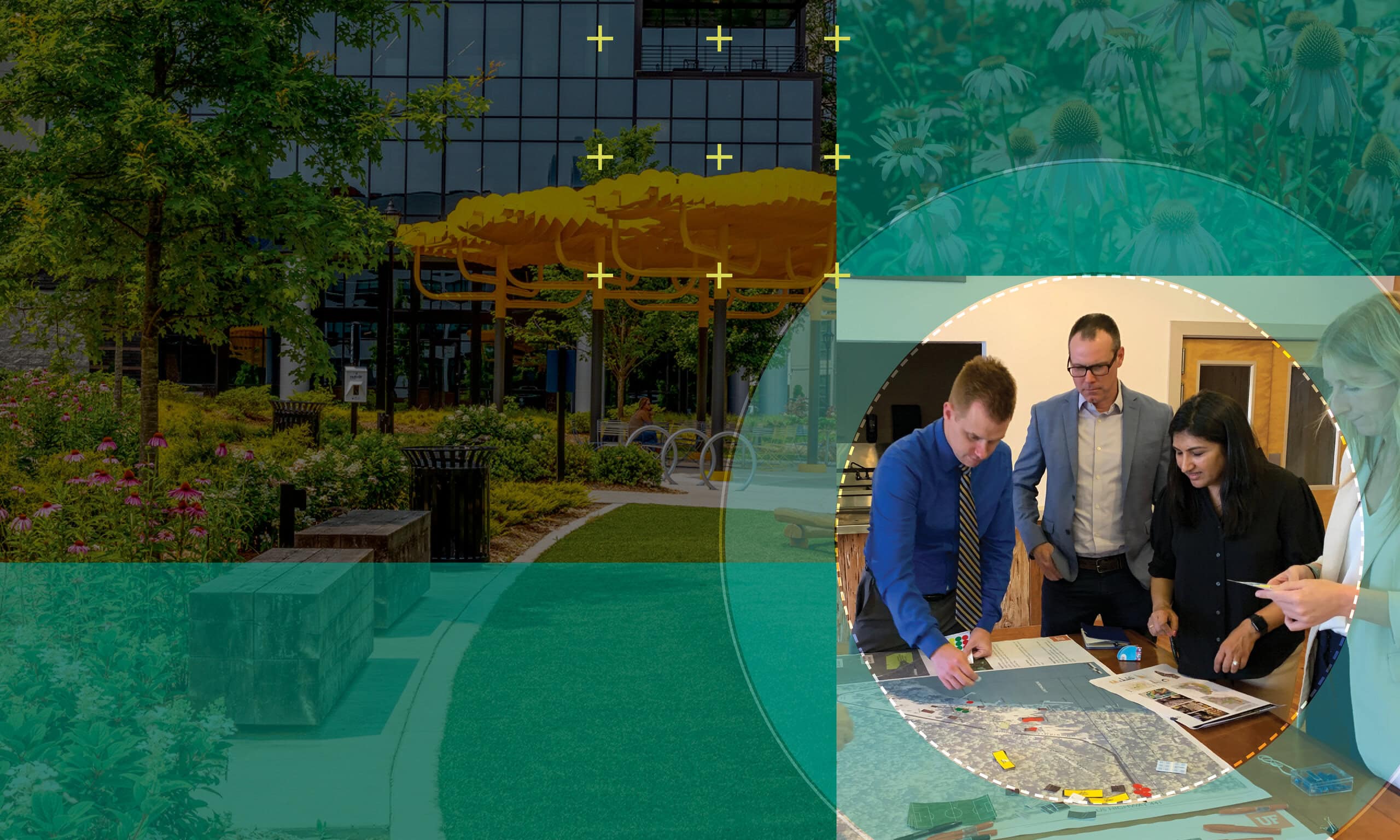
Resilience isn’t just about preserving what’s already there, it’s about designing places that restore balance between the built environment and the natural systems that sustain it. As cities grow and climate pressures intensify, this relationship becomes increasingly fragile. Flooding, erosion, and habitat loss threaten ecosystems, while new development places added strain on resources.
Restoration responds by creating landscapes that work with nature, not against it. Whether through revitalizing existing places or introducing new systems that manage stormwater, improve water quality, and protect sensitive habitats these efforts help communities thrive over time.
As LandDesign’s Carrie Read, PLA, explains, “When we restore a place, we’re not just solving problems. We’re creating systems that will adapt and continue to serve the community well into the future.”
Designing for Balance in Action
Restoration can take many forms, from highly visible landscapes that invite people in, to systems that work quietly behind the scenes. Sometimes it’s about transforming a site to better serve both ecological and community needs. Other times, it’s about embedding environmental performance into the design of a new place from the start.
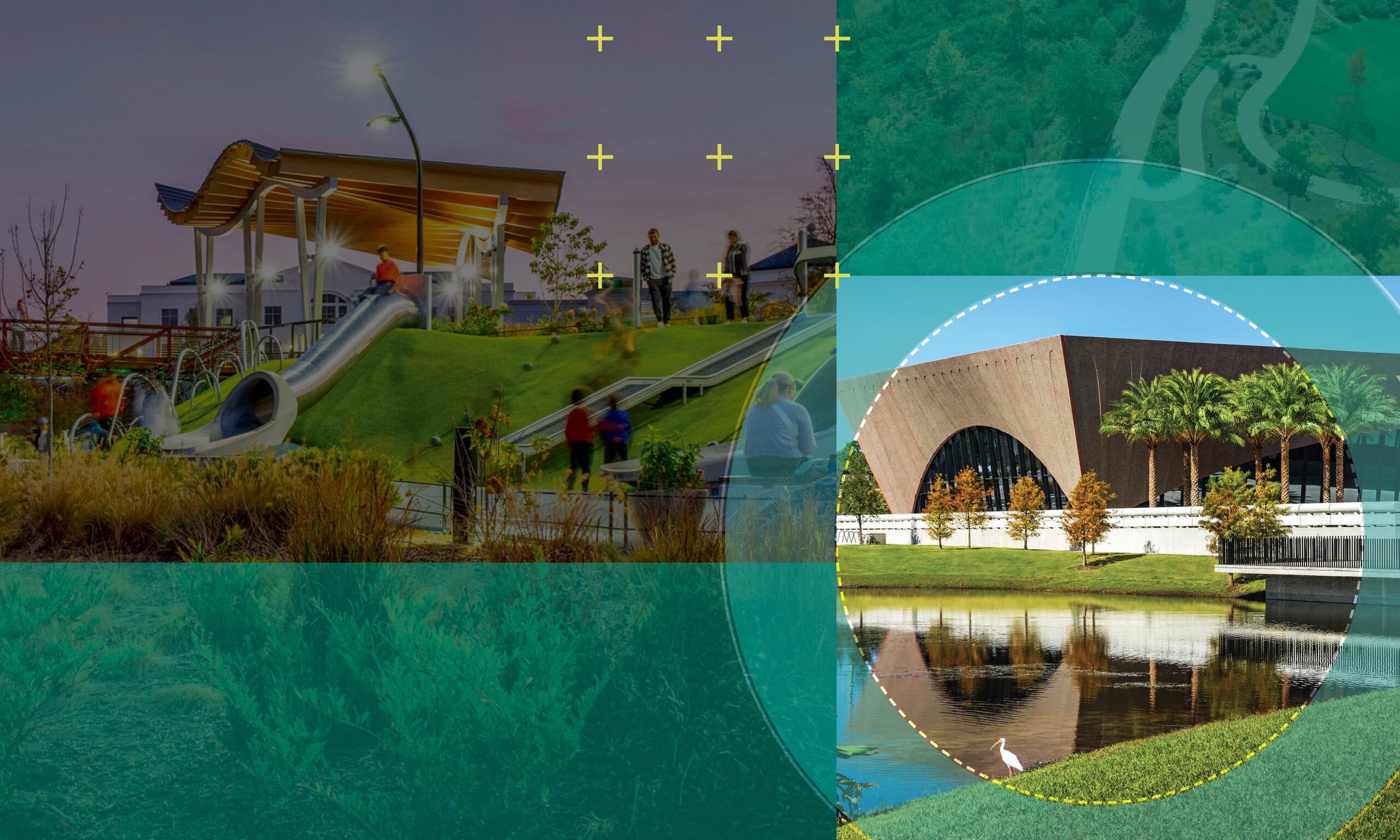
Stream Park at Ballantyne Reimagined and Winter Park Library + Events Center illustrate this range. While one creates a visible, amenity-rich public realm and the other operates largely behind the scenes, both share a common goal: protecting natural systems and deepening connections between people and their environment.
Stream Park at Ballantyne Reimagined – From Golf Course to Community Park
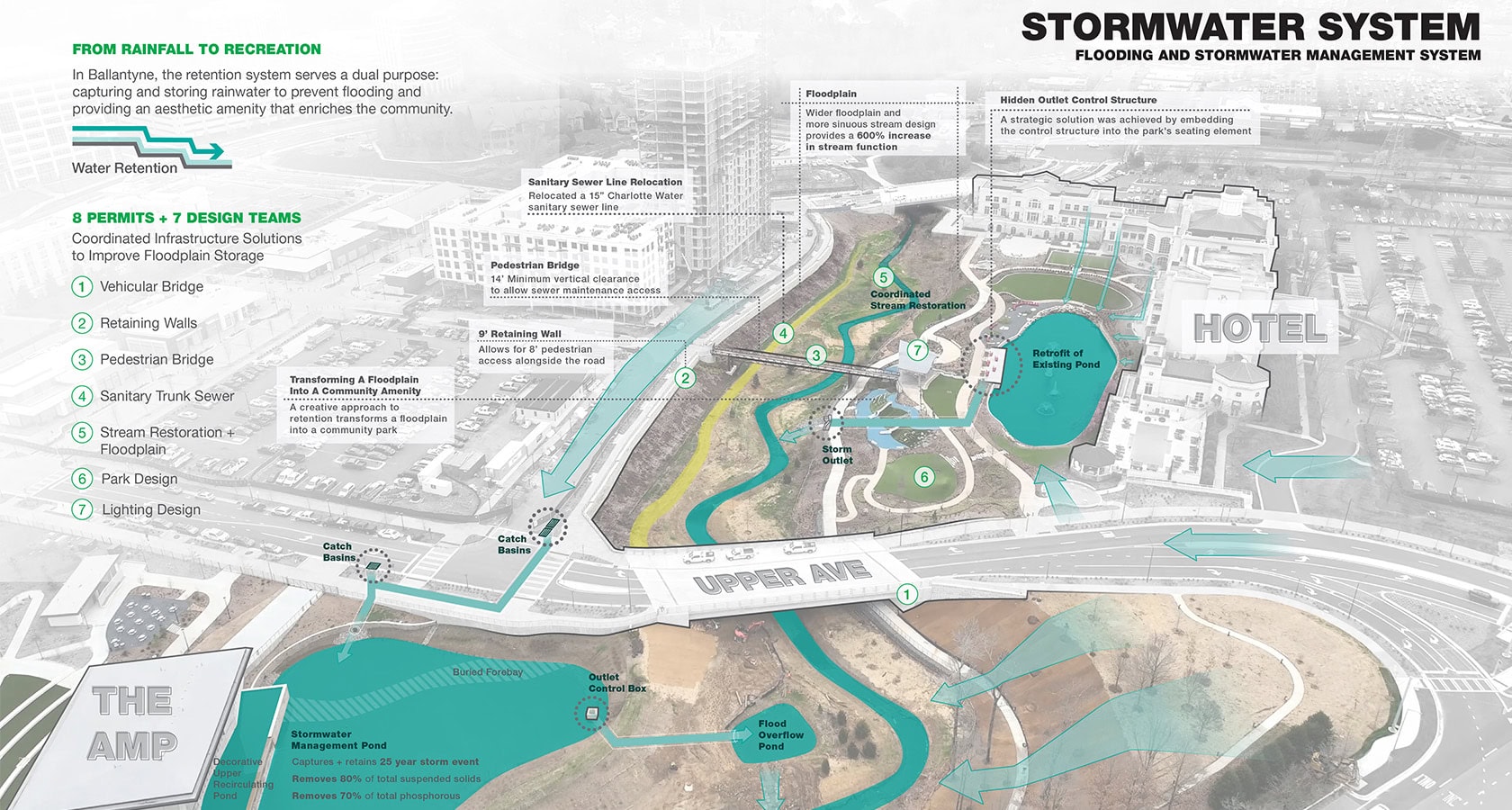
Stream Park represents a rare opportunity to reclaim a landscape and reshape it for the public good. Once the 18th hole of a private golf course, the site has been transformed into a dynamic public realm at the center of Ballantyne Reimagined.
The design restored a degraded stream and repaired an existing pond, integrating them into the comprehensive stormwater management system. What was once an exclusive, single-purpose landscape is now a vibrant ecological corridor that connects people with nature while improving the site’s environmental performance.
Winter Park Library – A Hidden System with Visible Impact
At the Winter Park Library + Events Center, restoration was built into the design from day one. Beneath the library’s parking lot, we created an integrated stormwater system to manage runoff from the new facility and surrounding site.
This system protects nearby lakes from pollution while meeting and exceeding the City of Winter Park’s stormwater treatment requirements. Above ground, the design creates a seamless connection between the library, surrounding civic spaces, and adjacent parkland, ensuring the site serves both environmental and community needs.
As Andrew Garrels, PLA, the project’s landscape architect, shares, “This solution resulted in a functional, elegant site feature that not only supports the library but also enhances the city’s overall stormwater management network.”

Resilience as an Ongoing Journey
Resilience doesn’t happen all at once. It is a continuous process of listening, adapting, and reinvesting. By restoring balance, through both renewal and forward-thinking, we create places that are better prepared to serve people and nature for generations to come.