Stormwater doesn’t recognize property lines or municipal codes. It follows gravity, flowing downhill, eroding soil, collecting runoff, and altering drainage patterns along the way. Yet for civil engineers, managing it is anything but simple. It’s a complex, jurisdictionally sensitive challenge that varies with every project.
The DC region has some of the country’s most stringent stormwater regulations. From the Chesapeake Bay watershed requirements to evolving local ordinances in Fairfax and Arlington, stormwater management today is less about getting water off-site quickly and more about slowing it down, treating it, and often keeping it on site entirely.
Today’s Stormwater Tools
Engineers have a broad toolkit for managing stormwater, combining traditional detention methods with low-impact development (LDI) techniques such as permeable pavement, green roofs, and bioretention planters. More advanced solutions, such as underground detention systems, manage both water quantity and quality while preserving surface area for development. These approaches can be mixed and matched depending on site constraints, client goals, and jurisdictional requirements.

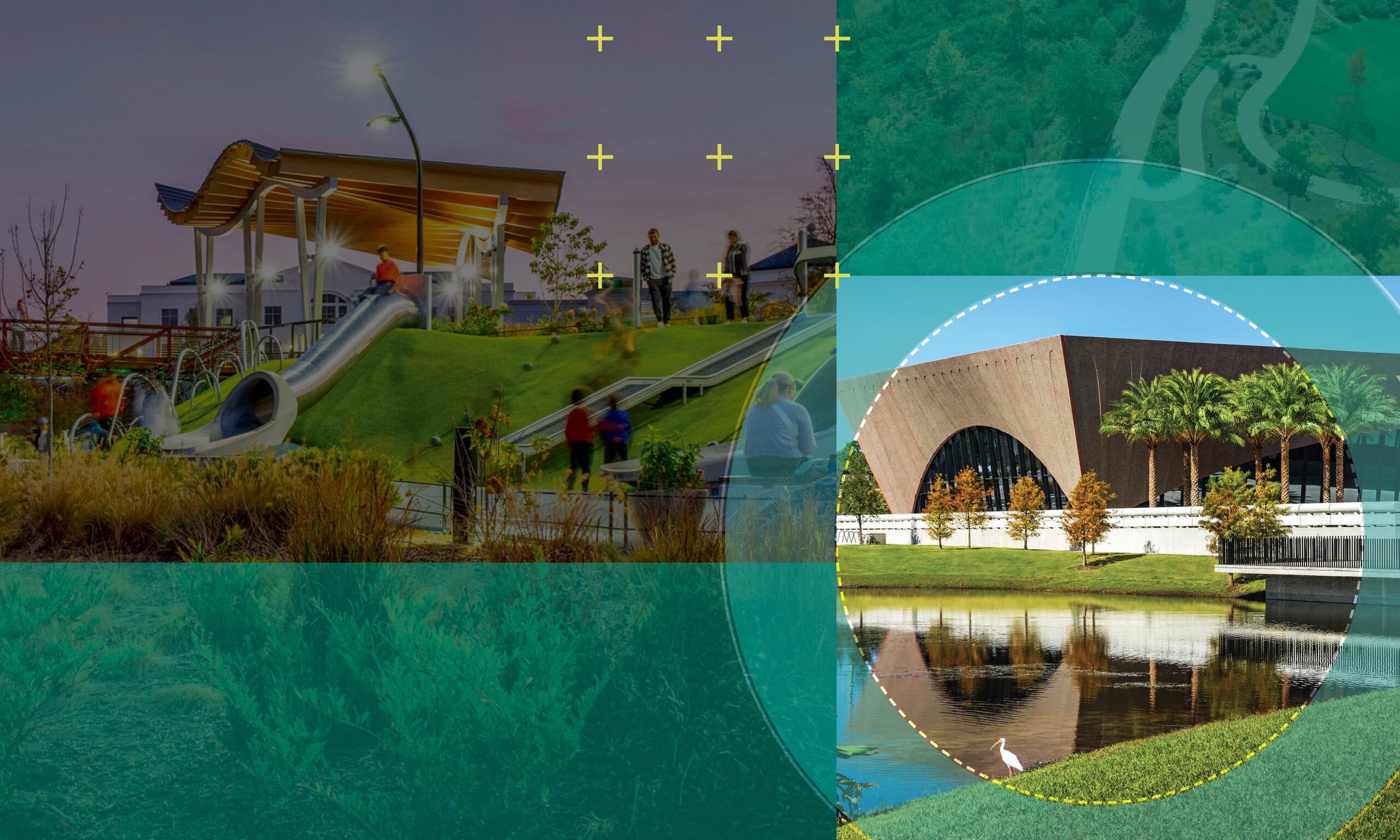
At the Winter Park Library + Events Center, stormwater management happens below the surface, where an underground system manages runoff and protects nearby lakes, allowing the civic spaces above to connect seamlessly with the surrounding parkland.
Navigating Jurisdictional Complexity
While water behaves the same everywhere, jurisdictions do not. Stormwater is arguably the most jurisdictionally sensitive utility, with each locality maintaining its own standard for rainfall computation, treatment requirements, and permitting process. On one Arlington project, our team coordinated with Arlington County, the District Department of Transportation (DDOT), the Virginia Department of Transportation (VDOT), and the Virginia Department of Environmental Quality (DEQ), each with its own interpretation of the Clean Water Act and distinct review procedures. “Every agency had different stormwater criteria and permitting requirements,” says Jack Scanlon, Director of Civil Engineering, “so understanding how they overlay and where they diverge was critical to moving the project forward.”
Stormwater as an Asset
Navigating complex regulations is only part of the equation. At LandDesign, we see stormwater as an opportunity to add value, enhance experience, and improve performance across every site. When thoughtfully designed, stormwater systems can serve both function and community, managing runoff from a 10-year storm while creating meaningful open spaces.
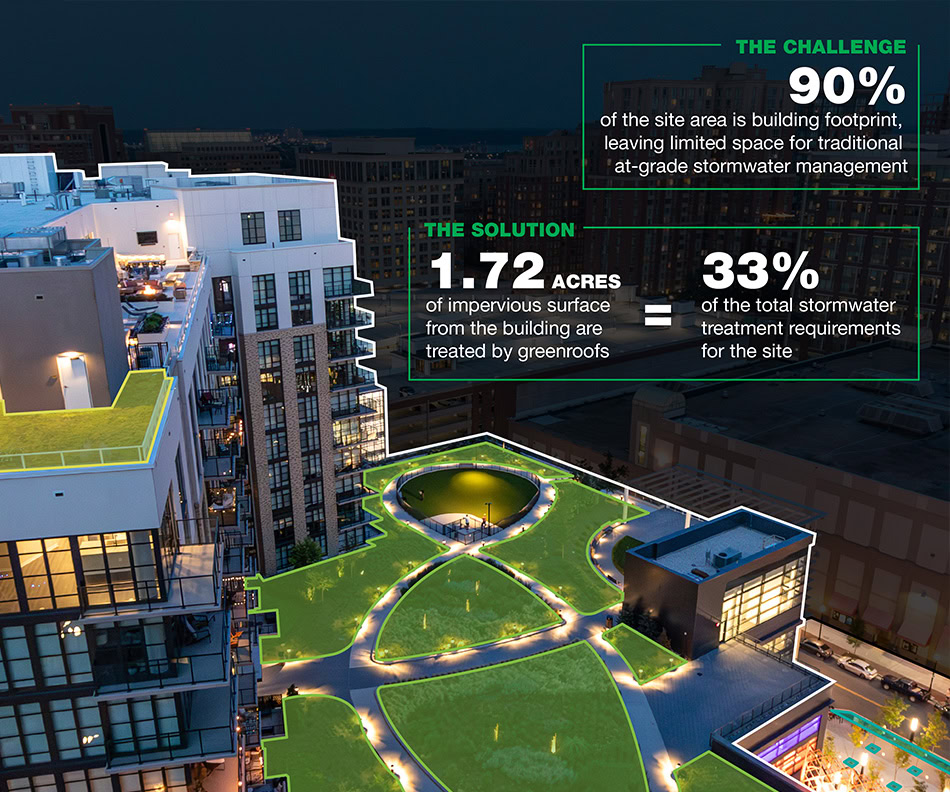
On-Structure Stormwater Management
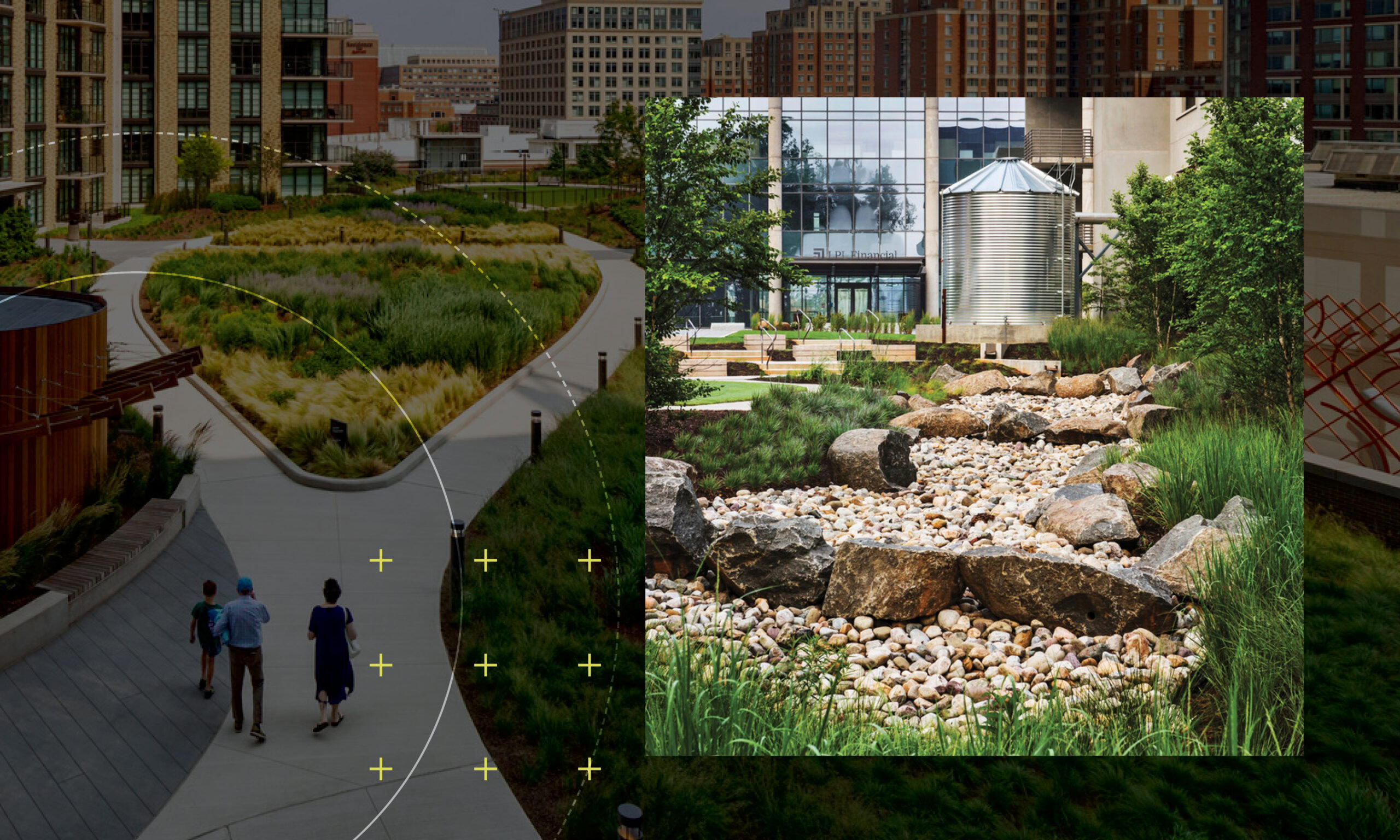
At Carlyle Crossing in Alexandria, we exceeded the city’s stormwater requirements by integrating a private, three-acre park atop a five-story podium. The park connects three residential towers and extends the public realm upward, offering residents open space and city views within a dense urban environment.
Stormwater Management as a Vehicle for Change
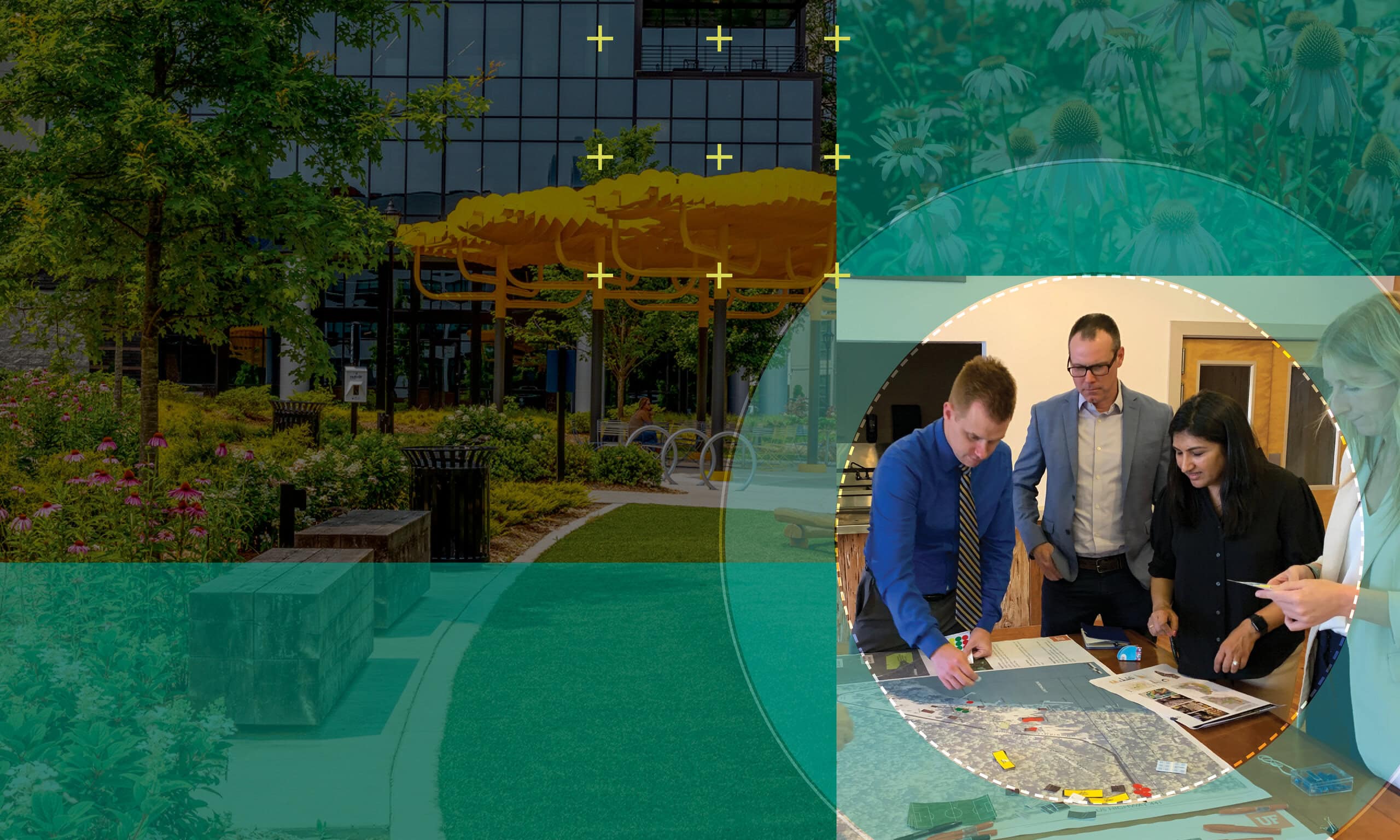
At Simon Elementary School in Washington, DC, evolving stormwater regulations became a catalyst for reimagining the schoolyard. Bioretention planters and naturalized play areas now manage runoff while creating outdoor learning and play experiences that support the rehabilitation of the Potomac watershed.

Stormwater That Marries Form and Function
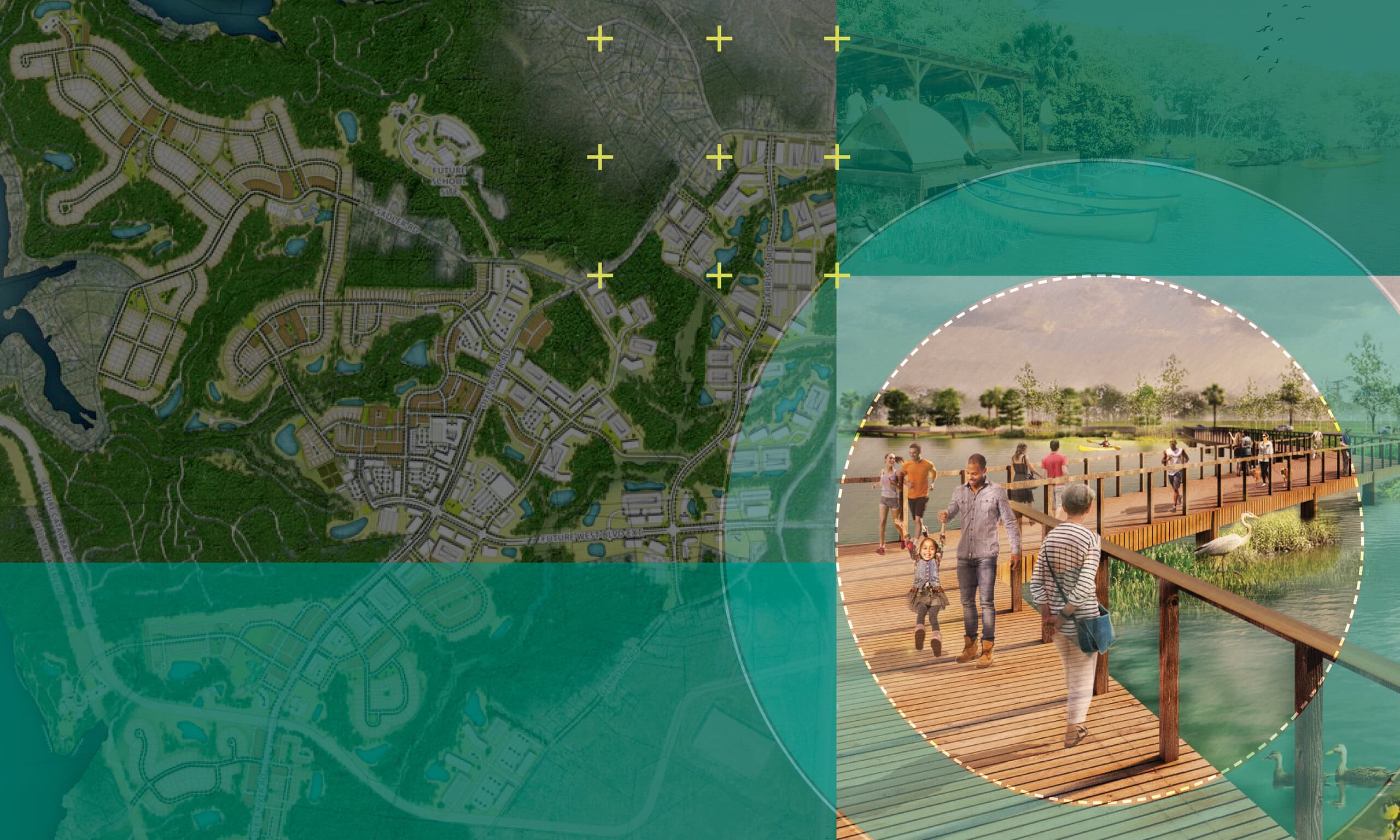
And at Stream Park at Ballantyne Reimagined, a required detention pond became an amenity, transforming into a decorative, recirculating water feature that elevates the performance space and enhances the surrounding public realm.
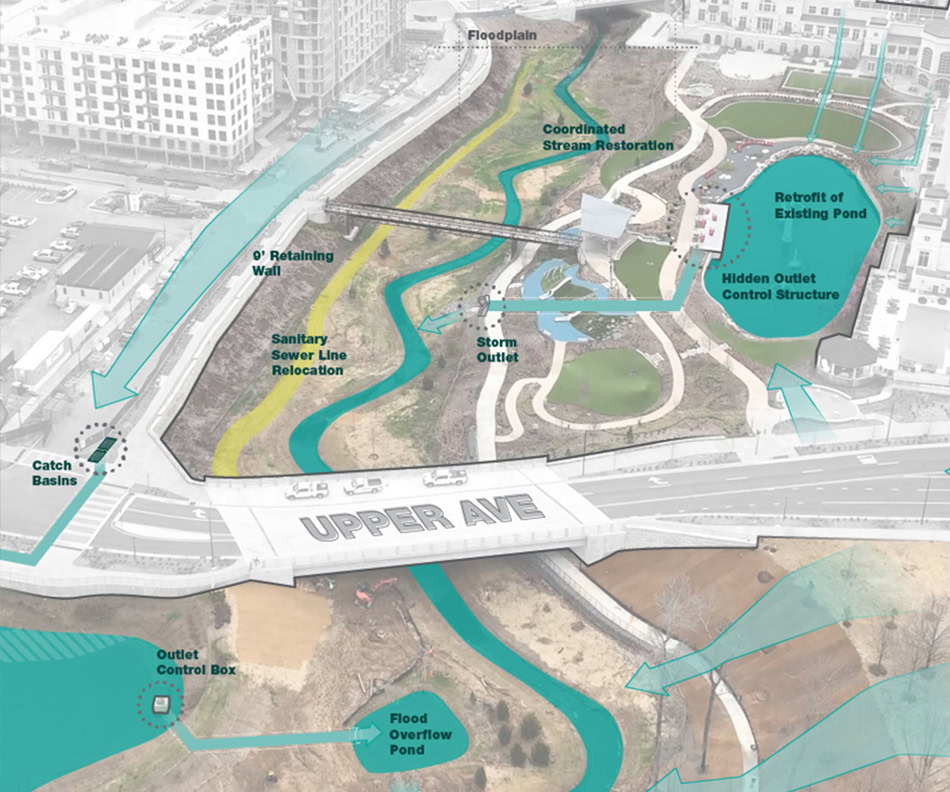
These projects demonstrate how stormwater infrastructure can improve biodiversity, increase property value, and create engaging public spaces. As Eli Goldman, Director of Civil Engineering, explains, “On many educational projects, stormwater systems double as learning labs, complete with interpretive signage and diverse treatment techniques. These efforts help communities understand the value of stormwater management and foster environmental stewardship.”
The Intersection of Form and Function
Across the DMV, stormwater management is defined by layers of regulations and shared environmental responsibility — a context that challenges engineers and designers to think creatively from the start. For LandDesign, success lies in anticipating these intersections early in process, turning technical requirements into a framework for creativity.
This mindset thrives when disciplines work together. By integrating civil engineering and landscape architecture, our teams design stormwater systems that are both functional and beautiful, seamlessly embedded in the site’s form. This integrated approach reflects how LandDesign’s engineers view stormwater: not as a regulatory burden, but as an opportunity to design systems that perform, educate, and endure.
In a region defined by complexity and high expectations, we pride ourselves in thinking creatively within those boundaries, proving that water doesn’t stop at county lines, and neither does great design.