As urban areas continue to densify, green spaces are increasingly replaced with concrete parking garages and other impervious materials, forcing rain runoff to fight for new paths through already strained systems. Without smart mitigation strategies, stormwater has nowhere to go—posing risks of flooding, foundation erosion, and costly structural damage, while clients face increased liability, project delays, and regulatory penalties. As requirements around stormwater management tighten and enforcement grows more stringent, strategic design and innovation are no longer optional in on-structure systems where space is limited; they are essential tools for turning constraints into solutions.
Incorporating On-Structure Green Space
Designing stormwater systems for on-structure environments requires careful planning and coordination across disciplines, where space is limited and decisions carry structural implications. While all stormwater plans must consider factors like topography and drainage direction, on-structure systems also demand close attention to weight load, planter depths, waterproofing, and how each design affects the architecture below. Through close collaboration between our in-house engineers and landscape architects—and coordinating with the project’s architects, structural engineers, and other stakeholders—we ensure stormwater systems are seamlessly integrated without compromising the design’s aesthetics or functionality.
On-structure design opens new opportunities to respond to the shrinking green space available within urban environments. This approach merges the landscape with elevated structures like rooftops, parking decks, or raised plazas, allowing designers to replicate the benefits of ground-level stormwater management while simultaneously maximizing available space as an amenity.
Innovation In Action
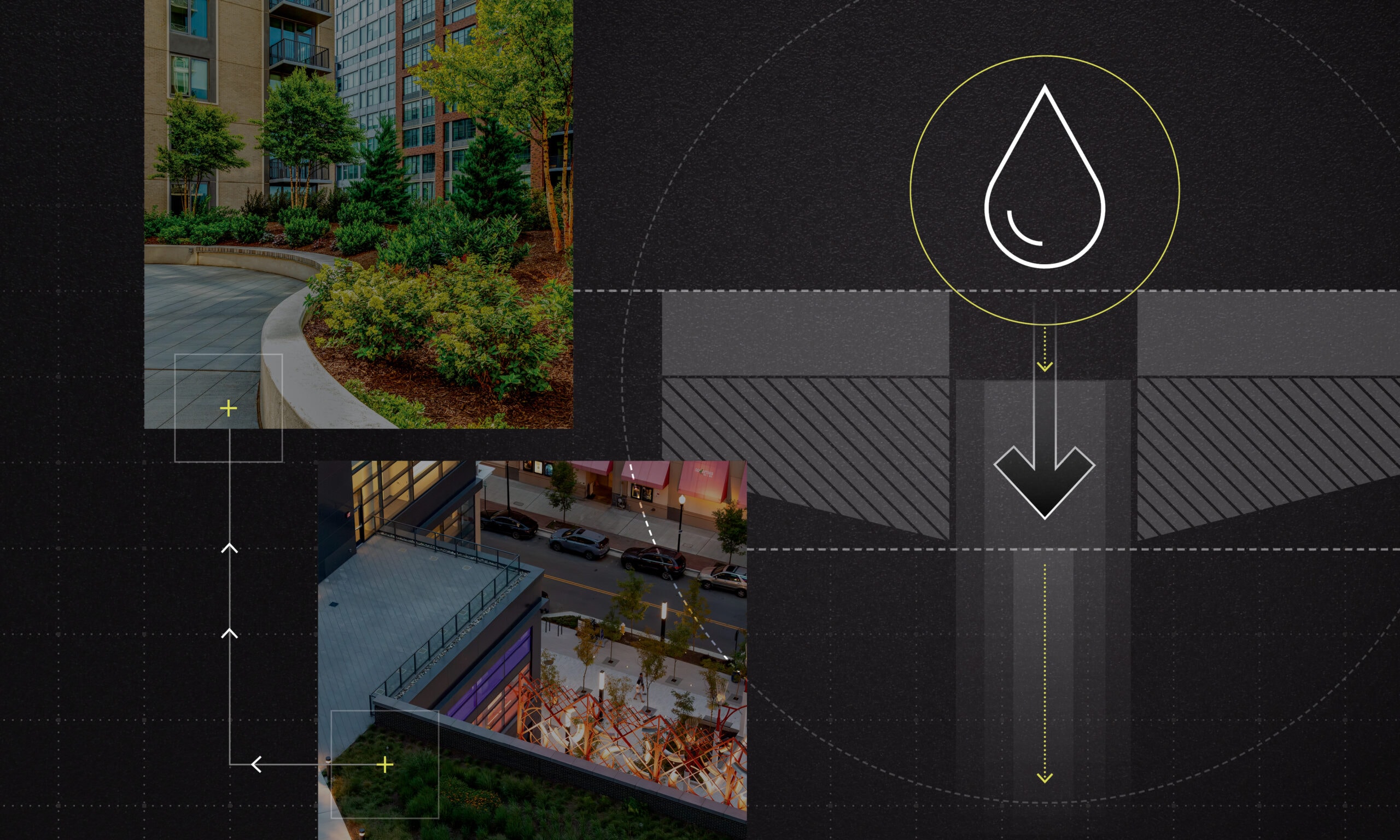
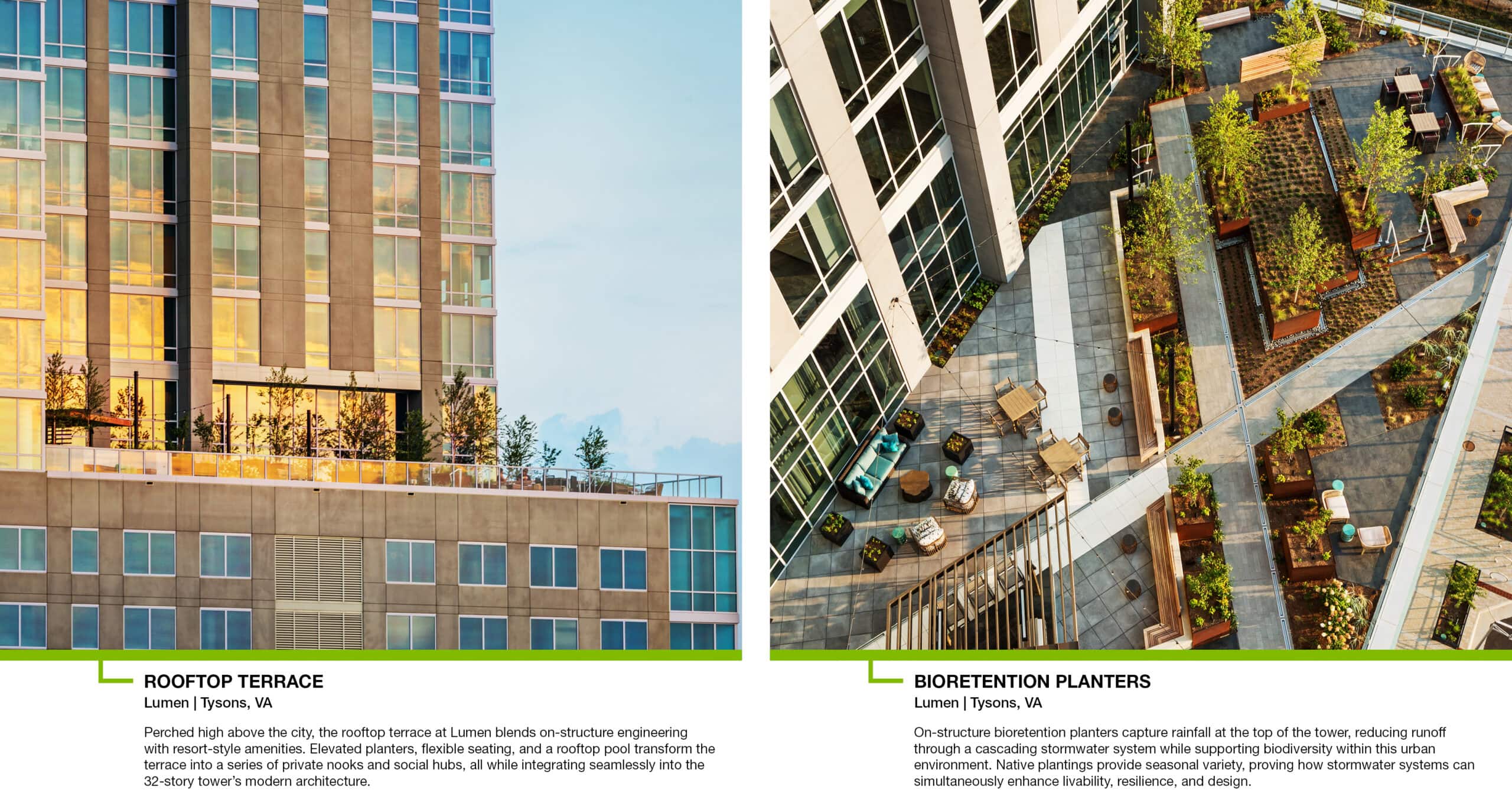
In both residential and commercial markets, on-structure stormwater management can be integrated throughout multiple levels of a project, from podiums and courtyards to rooftop amenities and parking structures. Extensive green roof systems play a vital role in this strategy, helping capture and treat rainwater at the source while supporting biodiversity and reducing runoff. At Lumen, a 32-story residential tower, stormwater is managed through a cascading system of bioretention planters across multiple levels. Rainwater landing on the rooftop is directed to planters on the 32nd floor terrace, while runoff from that terrace is piped down to planters on the 7th floor. From there, water continues down to bioretention systems at ground level, where additional runoff is treated through bioretention tree pits along the street. This “trickle-down” approach manages both water quality and quantity, reduces pressure on municipal infrastructure, and meets Fairfax County’s newest stormwater requirements.
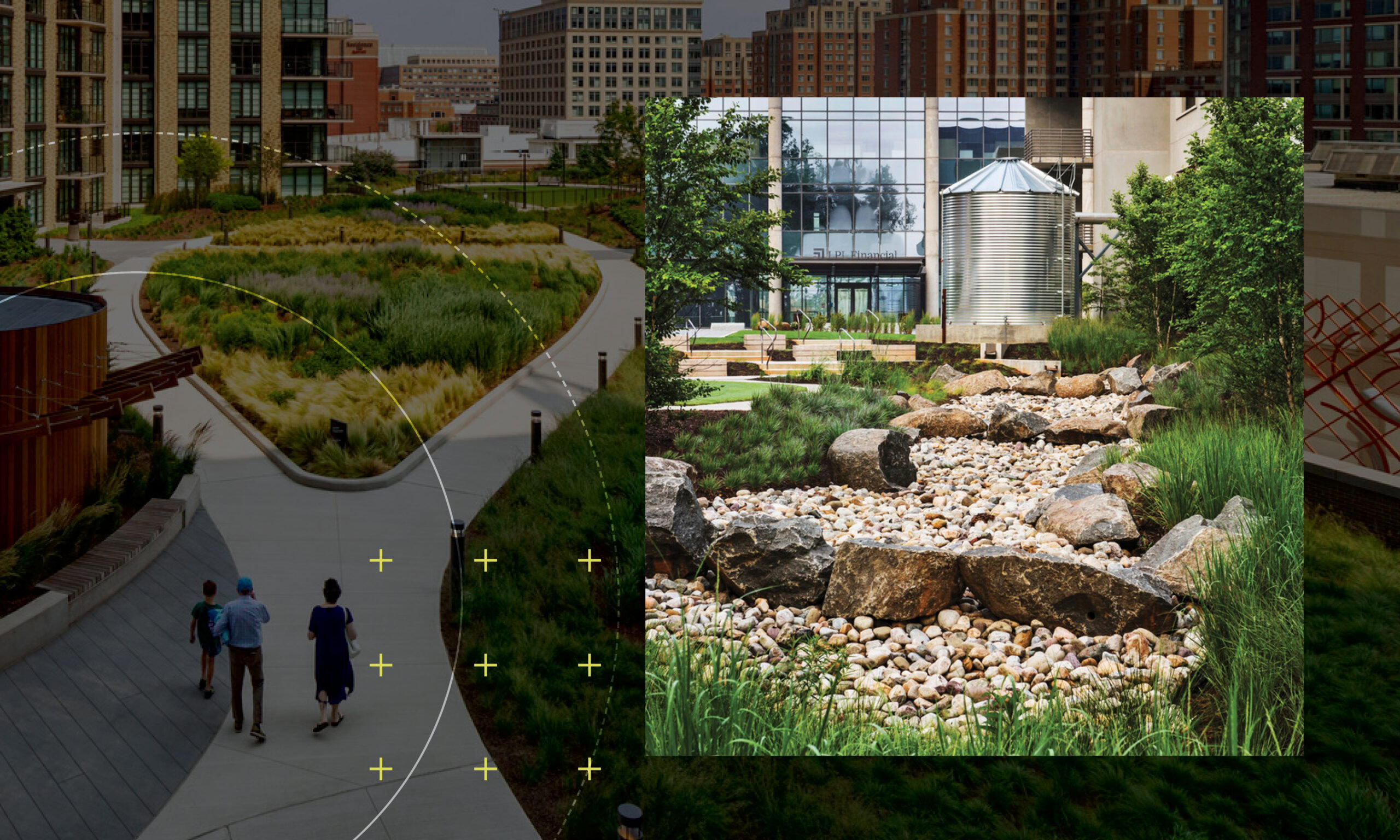
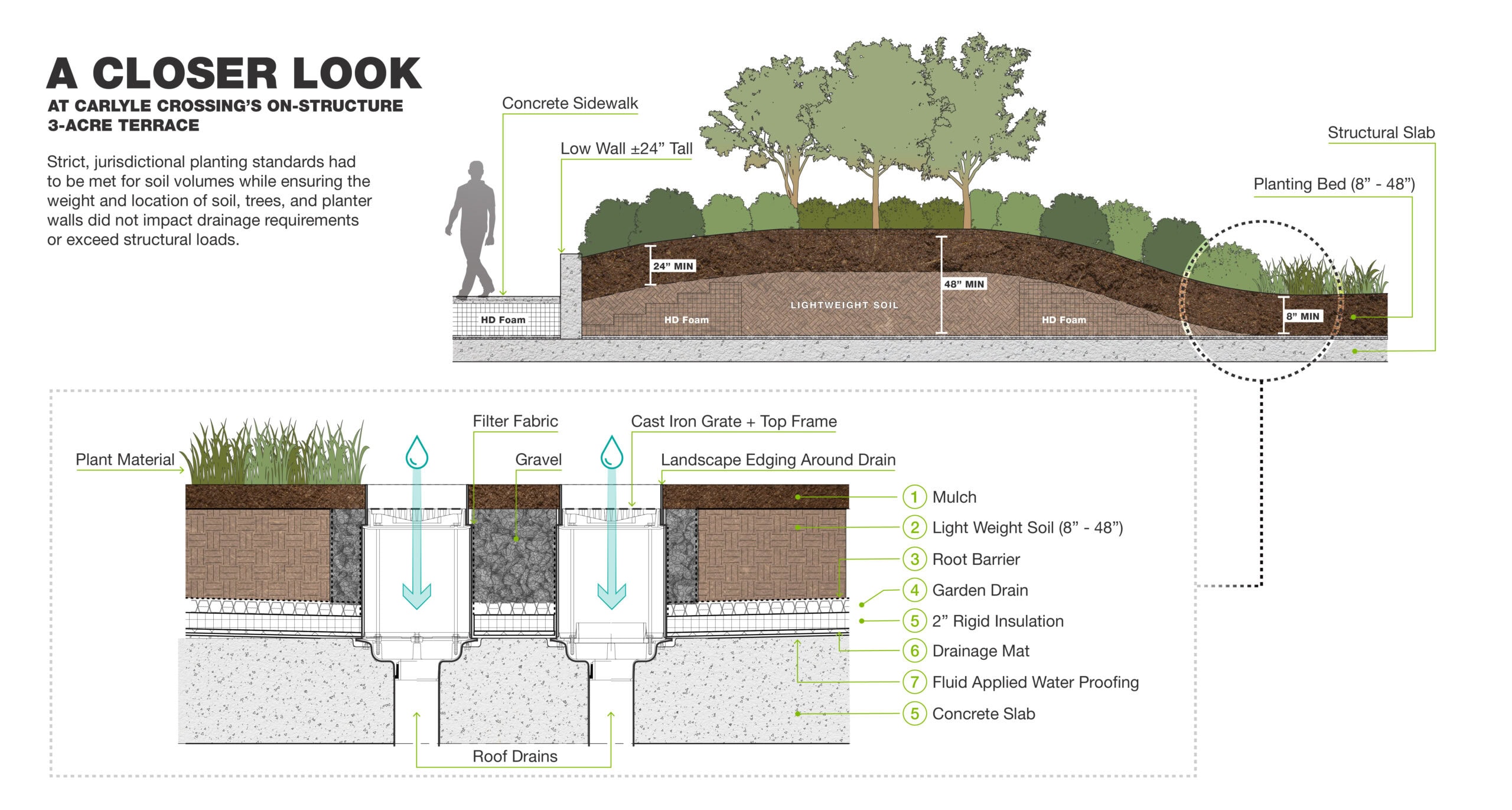
At Carlyle Crossing, the City of Alexandria’s stormwater requirements influenced the design of its expansive green space built entirely on-structure, demonstrating effective runoff control incorporated into a mixed-use development. The elevated park design treats 1.62 acres of impervious runoff, equating to 33% of the total stormwater management requirements for the entire development. The result is a nature-forward escape for residents and visitors that simultaneously serves as the stormwater management system. Here, innovative solutions were critical not only for managing the runoff, but also for supporting plant life and structural loads across the podium.

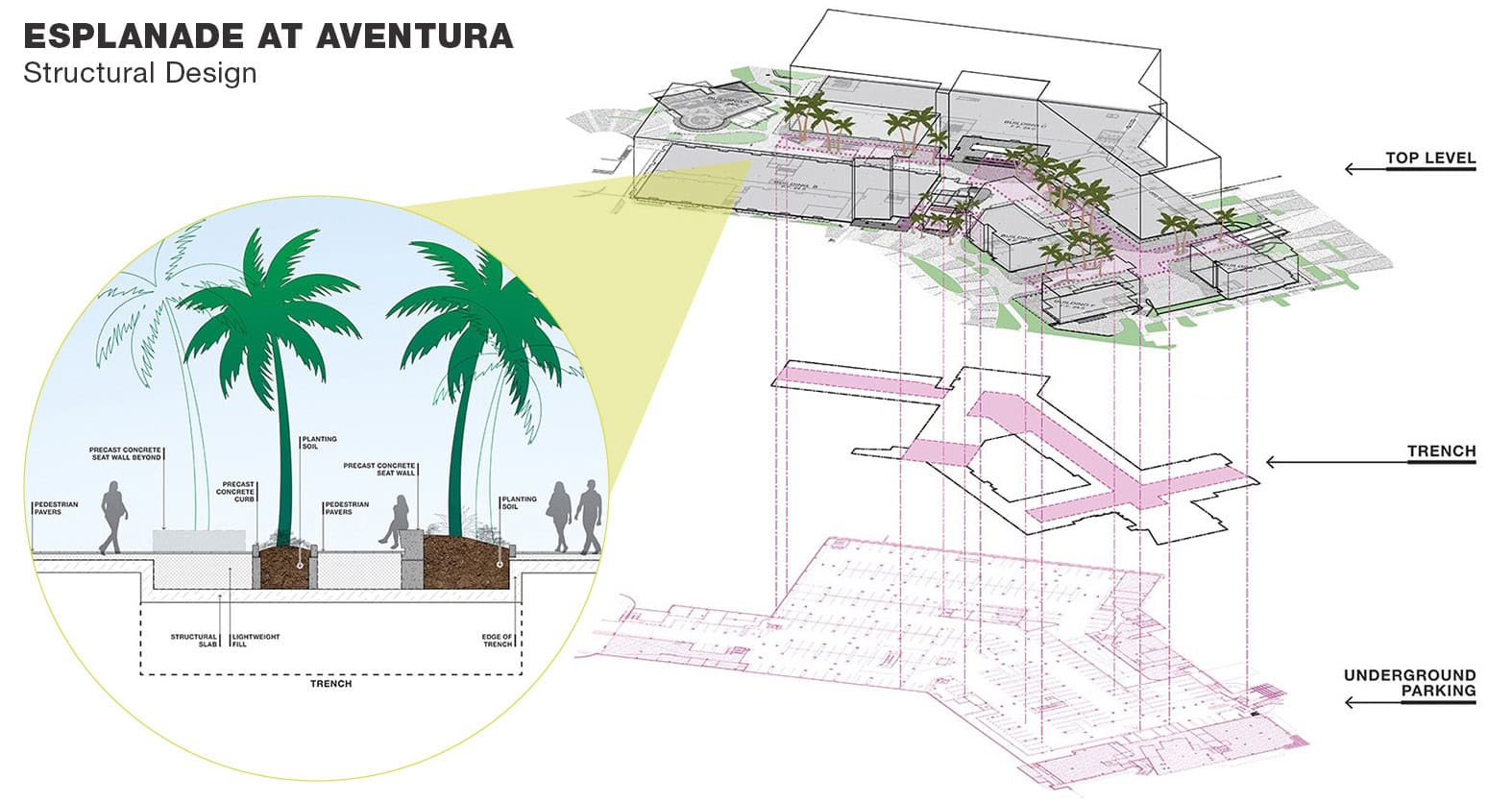
In urban retail environments, Esplanade at Aventura combines luxury shopping with sustainable stormwater management. More than half of the site’s landscaping and hardscaping is designed to be on-structure of this underground parking garage, including water features and tropical plantings. Esplanade’s design incorporates bioretention systems, proving that even in retail settings, designs can effectively manage stormwater while creating welcoming spaces for visitors to connect and unwind.
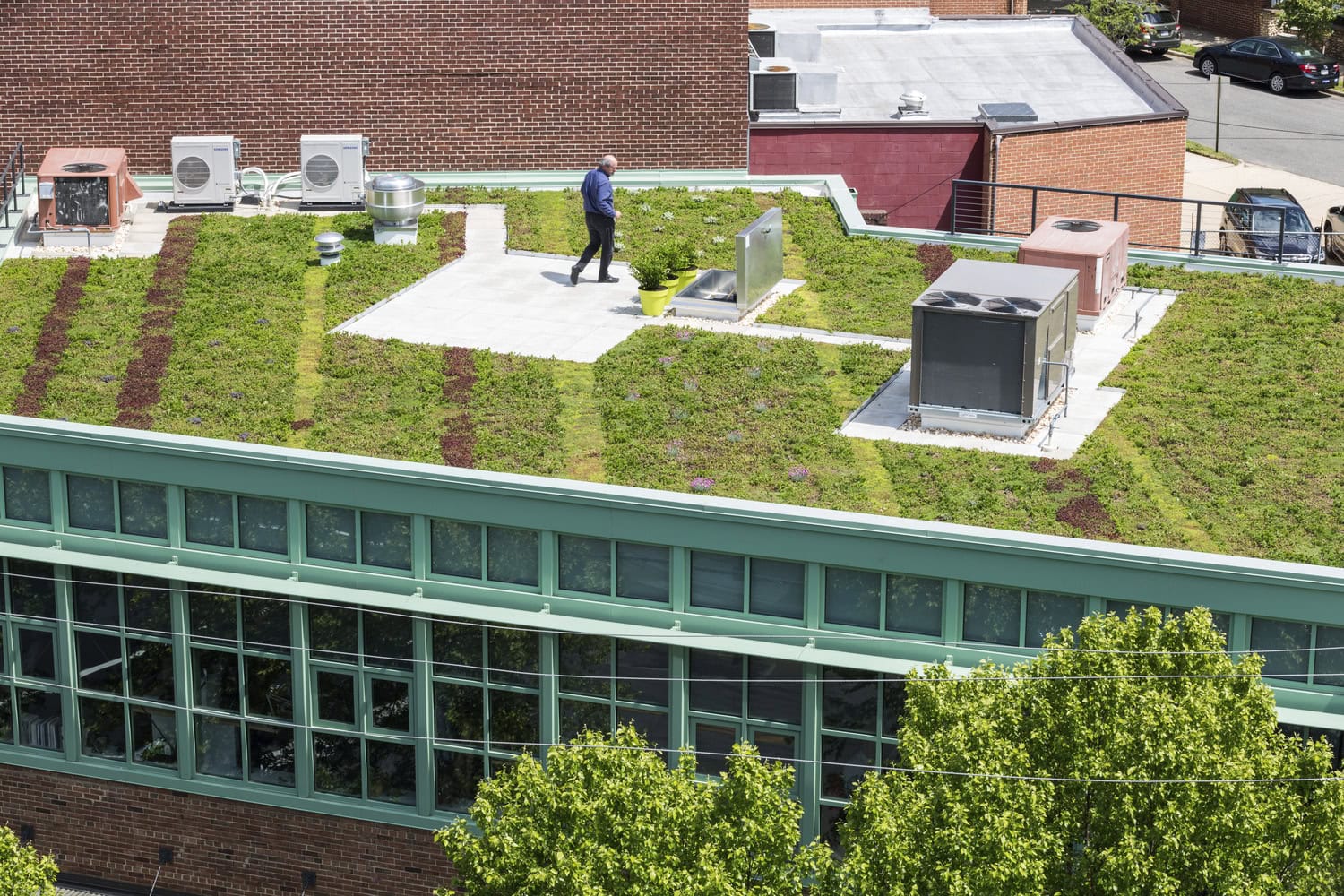
Our very own Washington DC office even exemplifies this same commitment to sustainability, having earned an Excellence in Sustainable Design Award from the City of Alexandria. Its ivy-covered walls, urban garden, and green roof not only enhance the building’s aesthetics but also serve practical purposes: both the green roof and garden help reduce impervious area, mitigate stormwater, and alleviate the urban heat island effect, keeping the building cooler in warmer months. Together, these systems reduce energy costs, enhance user experience, and contribute to effective stormwater management.
LandDesign's DC office (shown above) demonstrates how sustainability can be embedded at every scale, from green roofs to urban gardens.
The Future of On-Structure Stormwater Management
The increased scarcity of available green space continues to push designers to challenge conventional design by incorporating on-structure solutions. Sustainability can be prioritized while still allowing designers to create functional designs that mitigate the impacts of urban runoff, flooding, and water pollution. We see these urban challenges as opportunities, developing feasible solutions that can be implemented aesthetically. As ordinances and environmental regulations become increasingly stringent, flexible infrastructure solutions are essential to building resilient communities for tomorrow–starting today.
Want to Learn More?
Adapting a city’s infrastructure means thinking beyond traditional stormwater systems. Explore our latest blog post on Retrofitting Suburbia to discover innovative engineering solutions reshaping urban design for growing communities.