Great landscapes do more than shape the land—they create memorable experiences, strengthen communities, restore natural systems, and guide thoughtful development. The Florida Chapter of the American Society of Landscape Architects (ASLA FL) has recognized three LandDesign projects with 2026 Design Awards: Boxi Park, Westside Park, and West River Village Master Plan. From a community gathering place and conservation-focused park to a forward-thinking master plan, each project addresses a different design challenge and represents a distinct vision for place. Together, they demonstrate how thoughtful design can create lasting value for people, communities, and the environment at every scale.
Boxi Park at Lake Nona Town Center, Design Award – Commercial Category
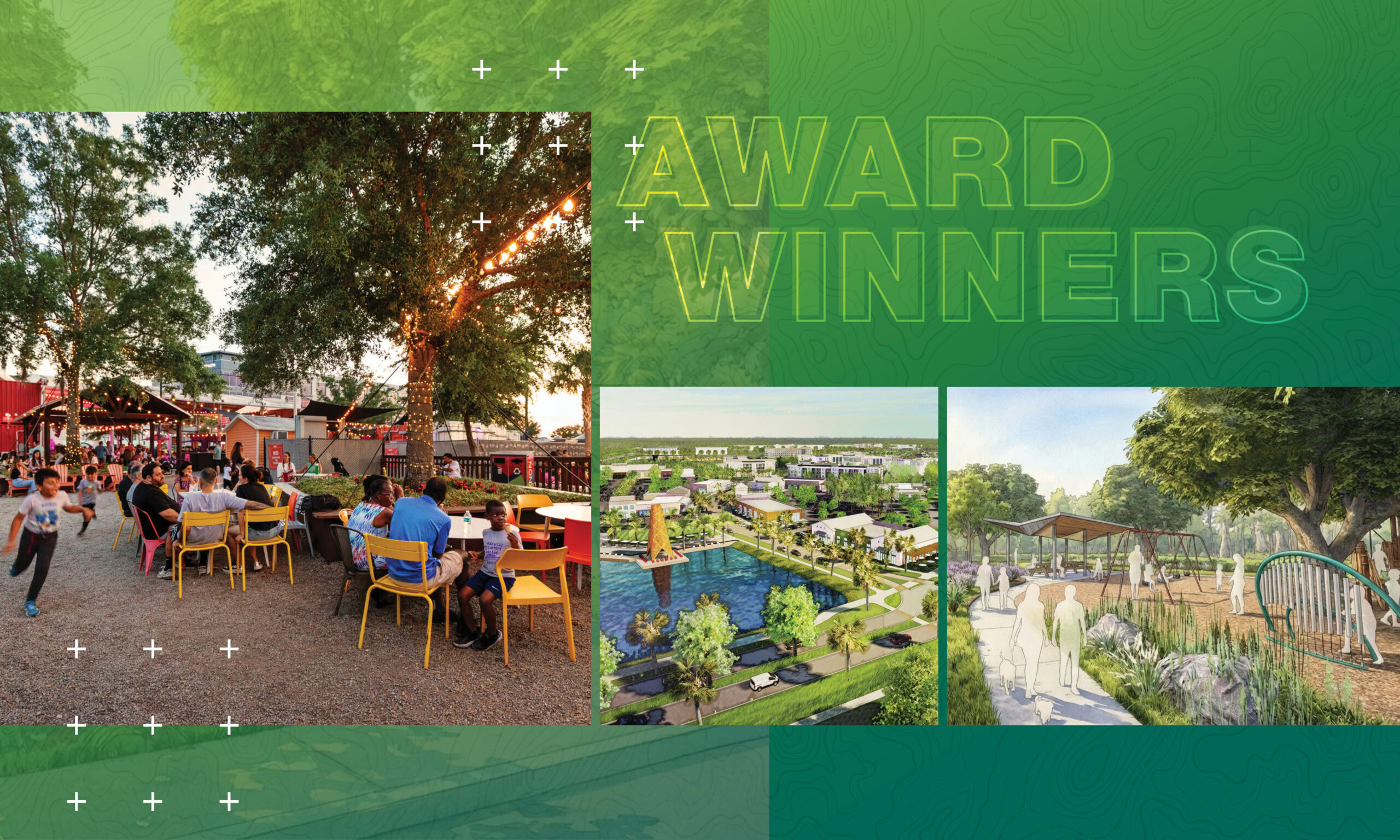
Originally conceived as a temporary activation, Boxi Park transformed a complex half-acre site at the entrance to Lake Nona Town Center into Orlando’s first container park. Repurposed shipping containers and a climate-responsive landscape support dining, events, and everyday activity, creating a destination that has become one of Lake Nona’s most recognizable places.


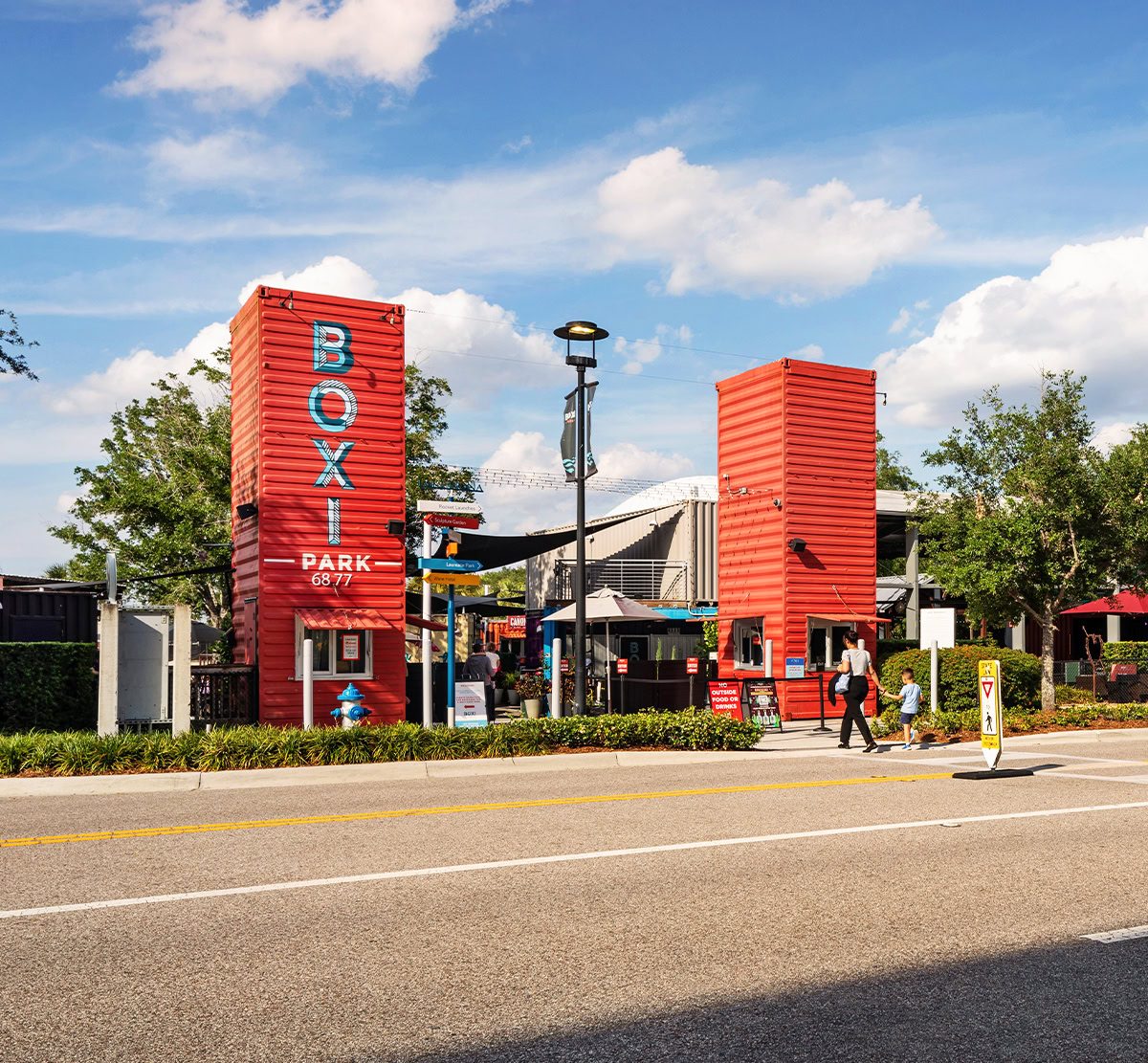
The project also serves as a testing ground for new food-and-beverage concepts, extending its impact beyond the site itself to inform the continued evolution of Lake Nona Town Center. “Our goal was to create a flexible, welcoming space that could evolve alongside Lake Nona. It’s rewarding to see how Boxi Park has become both a community destination and an important part of the Town Center’s continued evolution,” adds LandDesign Director and Project Manager Kristen Sweatland, PLA.
Learn how Boxi Park became a catalyst for community life and commercial innovation in Lake Nona.
Westside Park, Design Award – Unbuilt Category
Westside Park transforms a 39-acre site within the Lake Wales Ridge ecosystem into a resilient public landscape where conservation shapes every design decision. The park protects 38 acres of native habitat while balancing ecological stewardship with opportunities for people to experience nature through trails, educational experiences, observation areas, and low-impact recreation.


LandDesign Director and Project Manager Carrie Read, PLA, shares, “Westside Park reflects our commitment to creating places that bring people together, enhance quality of life, and preserve meaningful connections to the outdoors for generations to come. We’re honored to help realize a vision that will serve the Osceola County community for years to come.”
Explore the vision behind Westside Park and its approach to conservation-led design.
West River Village Master Plan, Design Award – Planning + Analysis Category
Adjacent to the Myakka River corridor, the West River Village Master Plan establishes a long-term vision for more than 200 acres of resilient mixed-use development shaped by Florida’s natural systems. The plan organizes residential, hospitality, retail, and civic uses around preserved wetlands, ecological corridors, canals, and a 17-acre lake, forming a framework where future growth and environmental stewardship work together.


Through extensive environmental analysis, thoughtful land-use planning, and a connected network of open spaces, the master plan provides a blueprint for growth that strengthens both community life and ecological health. “Great master planning starts with understanding the land. By working with the site’s natural systems, we were able to create a long-term vision that supports future growth while preserving the environmental character that makes West River Village unique,” says LandDesign Partner and Project Manager Chad Kovaleski, PLA.
Discover how the West River Village Master Plan balances future growth with environmental stewardship.
Boxi Park, Westside Park, and West River Village Master Plan represent three distinct scales of design and three unique ways landscapes create lasting impact. One builds community through vibrant activation, one preserves and celebrates a sensitive natural landscape, and one establishes a framework for resilient, long-term growth. Together, their recognition reflects the breadth of landscape architecture’s influence—shaping experiences, strengthening communities, restoring natural systems, and creating places that continue to evolve and inspire long after the design is complete.